Category: Injury Blog

Your blog category

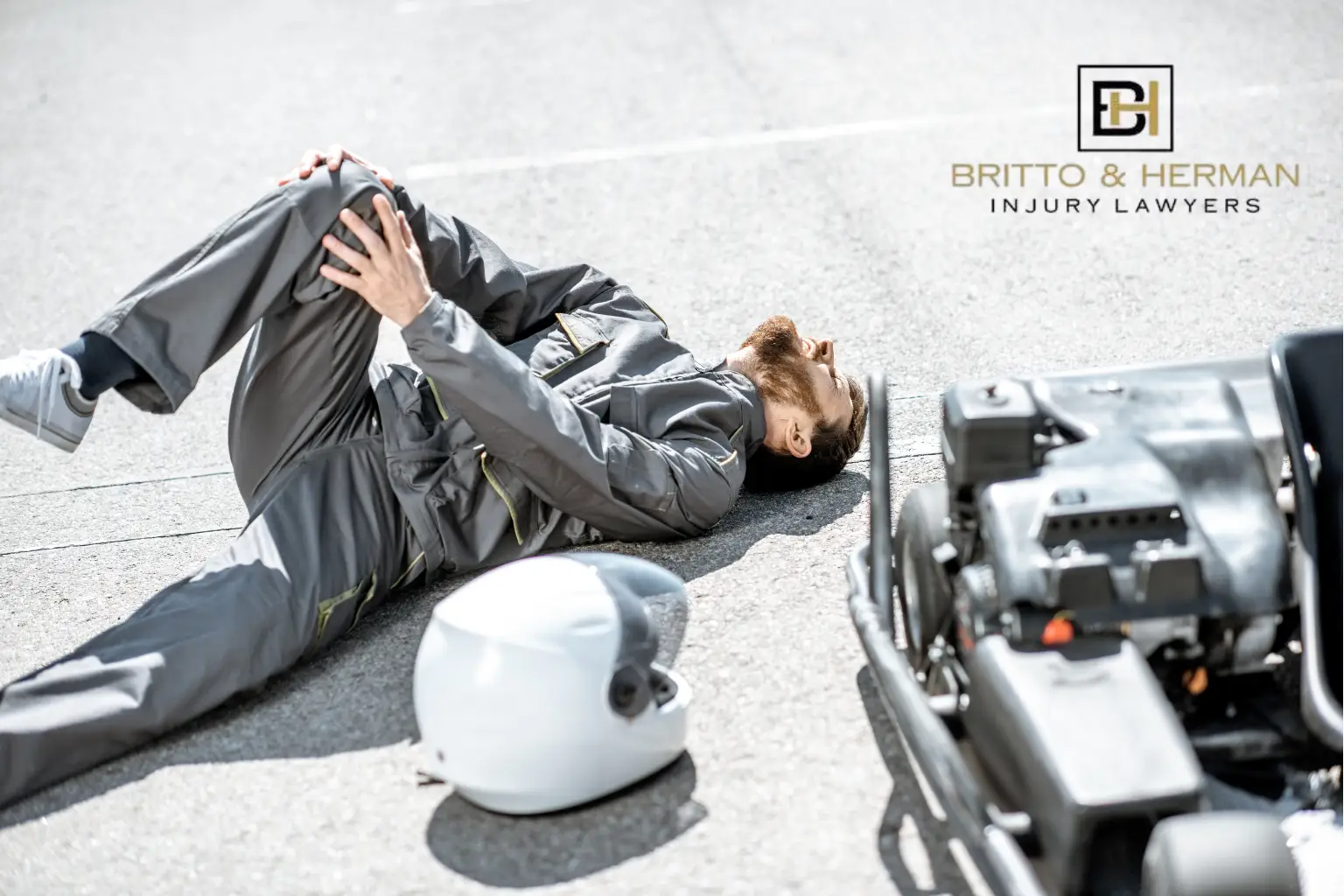
  • Florida Motorcycle Laws Every Rider in Jupiter Should Know

    Florida Motorcycle Laws Every Rider in Jupiter Should Know

    Riding a motorcycle in Florida offers a sense of freedom, but it also comes with serious risks. With its beautiful weather and scenic coastal roads, Jupiter, FL, is a prime spot for motorcyclists. However, understanding Florida’s motorcycle laws is crucial for staying safe and protecting your rights in case of an accident. Britto & Herman Injury Lawyers, the trusted personal injury and accident lawyers in Jupiter, FL, are here to break down what every rider should know.

    Key Florida Motorcycle Laws

    Florida has specific laws designed to protect motorcyclists and ensure safety on the road. Here are some of the most important ones:

    • Helmet Laws – Florida allows riders over 21 to go without a helmet if they carry at least $10,000 in medical insurance. However, wearing a helmet significantly reduces the risk of severe injury or death in an accident.
    • Lane Splitting – Unlike some states, Florida does not allow lane splitting, meaning motorcyclists cannot ride between lanes of slow or stopped traffic.
    • Eye Protection – Whether or not a helmet is worn, all motorcyclists must wear eye protection unless their bike has a windshield.
    • Insurance Requirements – Florida does not require motorcycle riders to carry Personal Injury Protection (PIP) like car drivers, but having additional coverage can be essential for medical bills and damages.
    • Passenger Rules – If a motorcycle is designed for two riders, passengers are allowed. However, all passengers under 21 must wear a helmet regardless of insurance coverage.

    Common Motorcycle Accident Causes in Jupiter

    Even when following the law, motorcyclists are vulnerable to accidents caused by negligent drivers and hazardous road conditions. Some of the most common causes of motorcycle crashes include:

    1. Distracted Driving – Many car accidents involving motorcycles happen because drivers fail to check their blind spots.
    2. Speeding and Reckless Driving – High speeds reduce reaction time, increasing the likelihood of a severe collision.
    3. Left-Turn Accidents – One of the most dangerous situations for riders is when a vehicle turns left in front of them.
    4. Road Hazards – Potholes, wet roads, and debris can be deadly for motorcyclists.
    5. Driving Under the Influence – Drunk or impaired drivers put motorcyclists at a greater risk of serious injury.

    What to Do After a Motorcycle Accident in Jupiter

    If you’ve been in a motorcycle accident, taking the right steps can protect your rights and help secure compensation:

    • Seek Medical Attention Immediately – Even if injuries seem minor, getting checked by a doctor is crucial.
    • Call the Police – A police report provides essential documentation for your case.
    • Gather Evidence – Take photos, get witness contact information, and document the accident scene.
    • Avoid Talking to Insurance Companies Alone – Insurance adjusters often try to minimize payouts—always consult an attorney first.
    • Contact a Personal Injury Lawyer – The experienced team at Britto & Herman Injury Lawyers can help you navigate the legal process and fight for fair compensation.

    How Britto & Herman Injury Lawyers Can Help

    Motorcycle accidents often result in serious injuries, expensive medical bills, lost wages, and emotional distress. The personal injury and accident lawyers in Jupiter, FL, at Britto & Herman Injury Lawyers, have a proven track record of winning cases for motorcycle accident victims. They understand Florida’s motorcycle laws and will fight aggressively to secure the compensation you deserve.

    Injured in a Motorcycle Accident? Contact Us Today!

    If you or a loved one has been injured in a motorcycle accident in Jupiter, FL, don’t wait. Call Britto & Herman Injury Lawyers at (561) 782-2891, visit https://staging.brittoherman.com/, or email info@brittoherman.com for a free consultation. Let us be your voice in the fight for justice.

  • The Hidden Dangers of Motorcycle Accidents in Jupiter, Florida: What You Need to Know

    The Hidden Dangers of Motorcycle Accidents in Jupiter, Florida: What You Need to Know

    Riding a motorcycle in Jupiter, Florida, offers freedom and excitement, but it also comes with significant risks. While Florida’s sunny weather and scenic roads make it a popular destination for motorcyclists, the dangers of accidents are ever-present. Understanding these risks and knowing your legal rights can make all the difference if you or a loved one is involved in a motorcycle crash.

    Common Causes of Motorcycle Accidents in Jupiter

    Motorcycle accidents often happen due to a variety of factors, many of which involve negligence from other drivers. Some of the most common causes include:

    • Distracted Driving: Texting, eating, or adjusting the radio can cause drivers to miss motorcycles on the road.
    • Speeding and Reckless Driving: Cars traveling too fast may not have enough time to react to a motorcyclist.
    • Failure to Yield: Many motorcycle accidents happen at intersections when other drivers fail to yield the right of way.
    • Road Hazards: Uneven pavement, debris, and potholes pose more danger to motorcycles than to cars.
    • Drunk Driving: Impaired drivers have slower reaction times and poor judgment, increasing the likelihood of a crash.

    Florida Motorcycle Laws and Safety Measures

    Florida has specific laws in place to protect motorcyclists, but not all riders or drivers understand them fully. Here are key regulations to keep in mind:

    1. Helmet Laws: While Florida does not require helmets for riders over 21 who carry at least $10,000 in medical insurance, wearing a helmet significantly reduces the risk of head injuries.
    2. Lane Splitting: Unlike some states, Florida does not allow motorcycles to split lanes or ride between traffic lanes.
    3. Insurance Requirements: Florida does not require motorcyclists to carry personal injury protection (PIP) insurance, but having adequate coverage can be crucial after an accident.

    What to Do After a Motorcycle Accident in Jupiter, FL

    If you are involved in a motorcycle accident, taking the right steps can help protect your health and legal rights:

    1. Seek Medical Attention Immediately – Even if injuries seem minor, it’s essential to get checked by a medical professional.
    2. Call Law Enforcement – A police report will serve as valuable evidence for your case.
    3. Gather Evidence – Take photos of the accident scene, vehicle damage, and any visible injuries.
    4. Collect Witness Information – Witness statements can help strengthen your claim.
    5. Contact Britto & Herman Injury Lawyers – Navigating the legal system can be overwhelming, but experienced attorneys can help you seek the compensation you deserve.

    Why You Need a Personal Injury and Accident Lawyer in Jupiter, FL

    Motorcycle accident victims often face challenges when dealing with insurance companies and legal claims. At Britto & Herman Injury Lawyers, we understand how devastating these accidents can be. Our firm has recovered millions for clients, and we don’t take on cases unless we believe we can win. With our experience and dedication, we fight to ensure our clients receive maximum compensation for medical expenses, lost wages, and pain and suffering.

    Contact Britto & Herman Injury Lawyers Today

    If you or a loved one has been injured in a motorcycle accident in Jupiter, FL, don’t face the legal battle alone. Let Britto & Herman Injury Lawyers be your advocate in this challenging time. Call us at (561) 782-2891, visit our website at https://staging.brittoherman.com/, or email us at info@brittoherman.com to schedule a free consultation today.

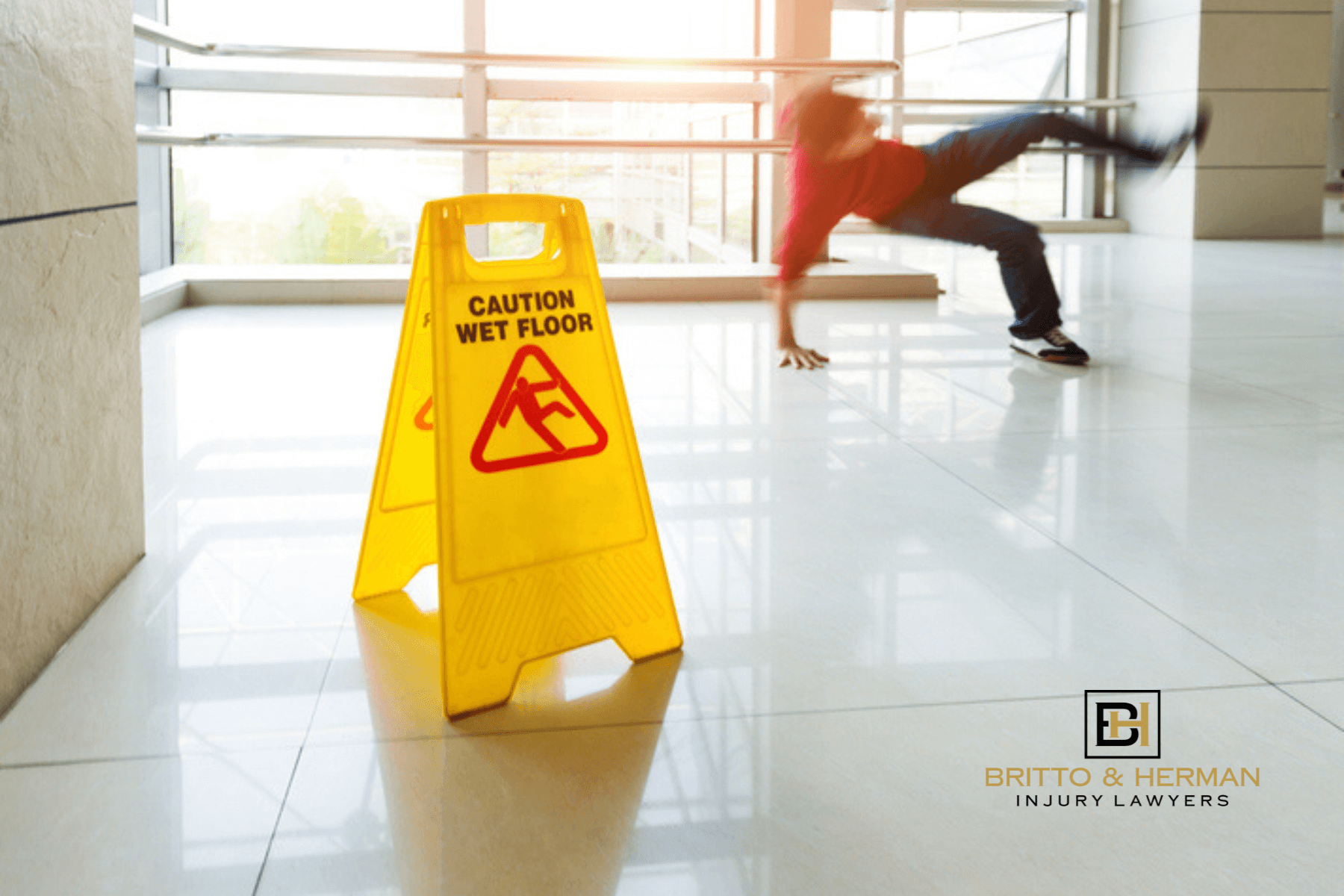
  • What Are Common Slip and Fall Injuries in Florida?

    What Are Common Slip and Fall Injuries in Florida?

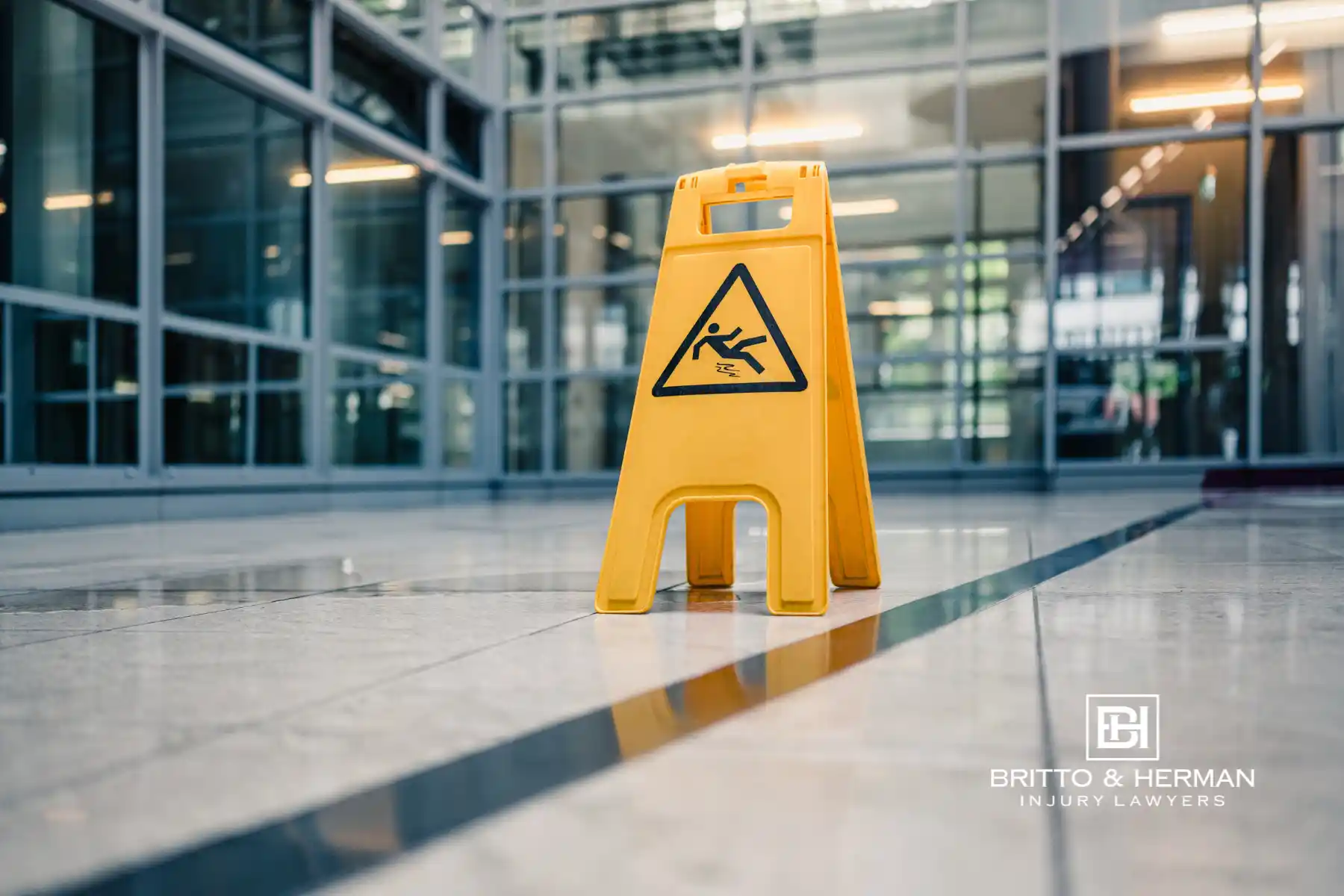
    Slipping and falling may seem like a minor accident, but the injuries can be far more serious than most people expect. In Florida, where wet surfaces, uneven sidewalks, and hazardous conditions are common, these accidents happen every day. Whether it’s in a grocery store, a parking lot, or a workplace, a simple misstep can lead to long-term pain, medical bills, and unexpected challenges.

    If you’ve been hurt in a slip and fall due to another party’s negligence, knowing the most common slip and fall injuries and how they can affect you is an important step toward protecting your well-being.

    Head Injuries and Traumatic Brain Injuries (TBI)

    A fall can happen so quickly that there’s no time to break the impact. The consequences can be severe if your head strikes the ground, a hard surface, or even an object on the way down.

    Head injuries from a slip and fall can range from mild concussions to traumatic brain injuries (TBI), which may cause:

    • Persistent headaches
    • Memory loss or confusion
    • Dizziness and nausea
    • Trouble concentrating
    • Loss of consciousness

    Even if symptoms seem mild initially, delayed brain injuries can develop over time, making medical attention essential after a fall.

    Fractures and Broken Bones

    The sudden impact of a fall often causes fractures, especially in vulnerable areas like:

    • Wrists and arms – Many people instinctively reach out to break their fall, leading to broken wrists, forearms, or elbows.
    • Hips – Hip fractures are especially dangerous for older adults and often require surgery or long-term rehabilitation.
    • Ankles and legs – A slip on an uneven surface or wet floor can twist the foot awkwardly, leading to ankle fractures or severe sprains.

    Broken bones can take weeks or even months to heal, sometimes requiring surgery, physical therapy, or long-term mobility support.

    Back and Spinal Cord Injuries

    Falls are one of the leading causes of spinal cord injuries, which can range from minor back pain to permanent paralysis. A sudden impact on the back can damage vertebrae, nerves, or the spinal cord itself, leading to:

    • Chronic back pain
    • Herniated or slipped discs
    • Nerve damage causing numbness or weakness
    • Reduced mobility or even paralysis in severe cases

    A spinal cord injury can have lasting effects, often requiring extensive treatment, physical therapy, or even long-term care.

    Soft Tissue Injuries

    Not all slip and fall injuries are immediately visible. Soft tissue injuries affect muscles, ligaments, and tendons, leading to pain and mobility issues that can develop over time. These injuries include:

    • Sprains and strains – Twisting movements during a fall can stretch or tear ligaments, causing pain and swelling.
    • Torn ligaments – Severe falls may tear important stabilizing ligaments in the knees, shoulders, or ankles.
    • Deep bruising – Internal tissue damage can cause painful swelling and stiffness, sometimes lasting weeks.

    Because these injuries aren’t always apparent right away, people may not realize the extent of their damage until symptoms worsen.

    Shoulder Injuries

    A direct impact on the shoulder or an attempt to break a fall with an outstretched arm can lead to painful injuries such as:

    • Dislocations – The upper arm bone can pop out of the shoulder socket, causing severe pain and loss of motion.
    • Rotator cuff tears – Damage to the muscles and tendons around the shoulder joint can limit movement and require surgery.
    • Fractured collarbone – A hard fall can break the clavicle, making lifting or moving the arm difficult.

    Shoulder injuries often require physical therapy, and in some cases, surgical repair may be necessary.

    Knee and Joint Injuries

    Landing on hard surfaces or twisting unnaturally during a fall can damage knee ligaments, causing long-term pain and mobility issues. Common knee injuries from slip and falls include:

    • Meniscus tears Sudden twisting can tear the cartilage in the knee, causing swelling and stiffness.
    • ACL or MCL injuries – The ligaments that stabilize the knee can stretch or tear, requiring surgery in severe cases.
    • Patellar fractures – A direct impact to the knee can break the kneecap, making walking difficult.

    Knee injuries can be particularly disruptive, often requiring months of rehabilitation to regain full strength and function.

    Cuts, Bruises, and Facial Injuries

    Even if a fall doesn’t cause broken bones, facial injuries can still be serious. Falling forward can result in:

    • Lacerations and deep cuts – Sharp objects, broken glass, or rough pavement can cause severe wounds.
    • Dental injuries – A fall can chip, break, or knock out teeth, requiring emergency dental care.
    • Eye injuries – A direct impact on the face can cause swelling, bruising, or even damage to vision.

    In some cases, scarring or disfigurement may require reconstructive procedures.

    Psychological Effects of a Slip and Fall

    A fall isn’t just a physical injury—it can also affect mental and emotional well-being. Many people experience:

    • Fear of falling again, leading to reduced mobility and independence
    • Anxiety or depression from dealing with pain and medical treatments
    • Post-traumatic stress, especially after a severe or highly public fall

    These effects are often overlooked but can be just as challenging as physical injuries. Seeking support—whether from a doctor, physical therapist, or counselor—can make a difference in recovery and long-term well-being.

    A slip and fall can cause more than just a few bruises—it can lead to serious injuries with long-lasting effects. From broken bones and spinal injuries to concussions and emotional distress, these accidents can disrupt daily life in ways most people don’t expect.

    If you’ve been hurt in a slip and fall accident in Florida, seeking medical attention is the first step. Some injuries take time to develop, and early treatment can prevent complications down the road.

    Hold Negligent Property Owners Accountable with Britto & Herman Injury Lawyers

    A slip and fall can leave you dealing with painful injuries, unexpected medical bills, and time away from work. But if someone else’s negligence caused your fall, you don’t have to face the consequences alone. Property owners are responsible for keeping their spaces safe—when they fail to do so, they should be held accountable.

    At Britto & Herman Injury Lawyers, Board Certified Trial Lawyer and Jupiter personal injury attorneys Daniel Britto, Esq., and Michael S. Herman, Jr., Esq. fight for those injured in slip and fall accidents throughout Palm Beach County and beyond. Whether your fall happened at a store, restaurant, hotel, or public space, our team will gather the evidence needed to build a strong case. From identifying hazardous conditions to negotiating with insurance companies, we’ll handle the legal process while you focus on healing.

    If a negligent property owner caused your injuries, don’t wait to take action. Your online search for a “slip and fall lawyer near me” and “slip and fall lawyer” brought you to this blog. Take the next step and call (561) 835-5555 or complete our confidential online form to schedule your free consultation. We’re available 24/7 to discuss your case and help you seek the compensation you need to move forward.

    Britto & Herman Injury Lawyers – The Voice for Florida Injury Victims

    Copyright © 2025. Britto & Herman Injury Lawyers. All rights reserved.

    The information in this blog post (“post”) is provided for general informational purposes only and may not reflect the current law in your jurisdiction. No information in this post should be construed as legal advice from the individual author or the law firm, nor is it intended to be a substitute for legal counsel on any subject matter. No reader of this post should act or refrain from acting based on any information included in or accessible through this post without seeking the appropriate legal or other professional advice on the particular facts and circumstances at issue from a lawyer licensed in the recipient’s state, country, or other appropriate licensing jurisdiction.

    Britto & Herman Injury Lawyers
    1001 W Indiantown Rd., Suite 101
    Jupiter, FL 33458
    (561) 835-5555
    https://staging.brittoherman.com/
  • Common Places Where Slips, Trips and Falls Occur in Florida

    Common Places Where Slips, Trips and Falls Occur in Florida

    In our previous blog, What Are the Most Common Causes of Slips, Trips, and Falls in Florida?, we explored the factors that often lead to these types of accidents. From wet floors in stores to uneven sidewalks, the causes can vary widely and sometimes catch you off guard.

    Building on that discussion, this blog shifts the focus to where these accidents are most likely to happen. Florida’s bustling tourist attractions, unpredictable weather, and high foot traffic make certain locations more prone to hazards than others. Beginning with wet and slippery floors in retail stores and restaurants, we’ll explore the most common places where slips, trips, and falls occur—and why these locations are particularly risky.

    Wet and Slippery Floors in Retail Stores and Restaurants

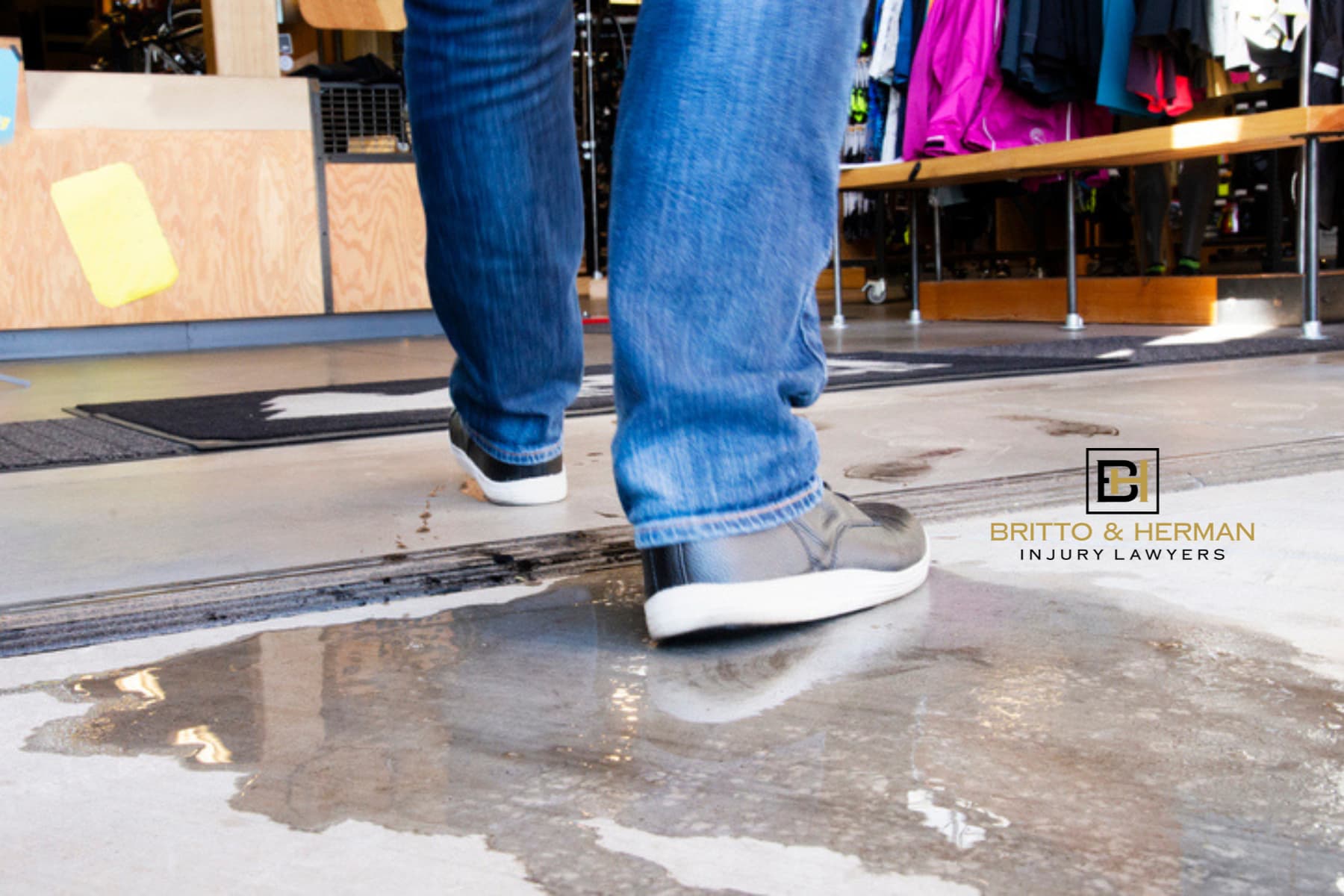
    Retail stores, restaurants, and supermarkets are prime locations for slip-and-fall accidents. In Florida, where humidity and sudden rain showers are common, wet floors can be especially hazardous. Spilled drinks, melting ice, or even water tracked in by customers can create dangerous conditions.

    Business owners and managers are required by Florida law to address these hazards promptly. According to Florida Statutes §768.0755, a claimant in a slip-and-fall case must prove the business owner had actual or constructive knowledge of the dangerous condition and failed to remedy it. Constructive knowledge can be established if the condition existed long enough that it should have been noticed or occurred regularly, creating a foreseeable risk.

    Uneven Pavement and Cracked Sidewalks

    Outdoor spaces such as sidewalks and parking lots are another common setting for trip-and-fall incidents. Uneven pavement, potholes, and cracked surfaces can catch you off guard, particularly if lighting is poor. Florida cities and municipalities are responsible for maintaining public sidewalks, but private property owners are equally accountable for keeping their premises in safe condition.

    For instance, if you’re injured on a poorly maintained sidewalk outside a business, the property owner may be held liable. While Florida law doesn’t explicitly define the standards for sidewalk maintenance, liability often hinges on whether the property owner took reasonable measures to repair or warn about the hazard.

    Staircases and Escalators

    Staircases and escalators present unique risks due to their design and use. Broken handrails, uneven steps, and slick surfaces can lead to devastating falls. Additionally, escalators can cause accidents if they malfunction or if loose items like shoelaces get caught.

    In Florida, property owners must ensure that staircases and escalators are regularly inspected and repaired. Failing to do so can result in liability under premises liability laws. If you’ve been injured in such an area, it’s important to document the condition that contributed to your fall, as this evidence can be critical in pursuing a claim.

    Hotels and Resorts

    Florida’s tourism industry means that hotels and resorts are common places for slips, trips, and falls. Wet pool decks, slippery bathroom floors, and poorly lit walkways can all pose dangers to guests. Property owners must take extra precautions to address these hazards, especially since guests may not be familiar with the layout of the property.

    For example, pool areas are a frequent site of accidents due to water splashing onto walkways. Florida law requires that pool decks meet safety standards, including non-slip surfaces and proper drainage. When these standards aren’t met, the risk of injury increases significantly.

    Construction Sites and Workplaces

    While slips and trips on construction sites are often considered workplace injuries, they can also involve visitors or pedestrians who pass through or near these areas. Uneven terrain, misplaced tools, and exposed wires are just a few of the hazards commonly found on construction sites.

    Employers and contractors are required to follow Occupational Safety and Health Administration (OSHA) guidelines to prevent these accidents. However, if you’re a visitor injured on a construction site, you may need to pursue a premises liability claim instead of a workers’ compensation claim.

    Recreational Areas and Parks

    Florida’s beautiful parks and recreational areas attract millions of visitors each year, but they also come with slip-and-fall risks. Wet grass, uneven trails, and poorly maintained playground equipment can all lead to injuries.

    Local governments and private entities that manage these areas are responsible for keeping them reasonably safe for public use. If you or a loved one is injured in a park due to negligence, such as a failure to address a known hazard, you may have grounds for legal action.

    Residential Properties

    Accidents can also happen at private residences. While you might feel hesitant to pursue a claim if the property owner is a friend or family member, Florida law holds homeowners responsible for maintaining safe premises. Common hazards include loose rugs, cluttered floors, or slippery driveways.

    Homeowners’ insurance often covers slip-and-fall accidents, so filing a claim doesn’t necessarily mean you’re creating financial hardship for the property owner. If you’re injured on someone else’s property, it’s essential to document the scene and notify the homeowner promptly.

    Preventing Slips, Trips, and Falls

    While you can’t always avoid hazards, being aware of common risk areas can help you stay vigilant. Take note of wet floors, uneven surfaces, and poor lighting, especially in high-traffic areas. Wearing appropriate footwear and staying focused on your surroundings can also reduce your chances of falling.

    Seeking Legal Support After a Slip-and-Fall Accident

    If you’ve been injured in a slip, trip, or fall due to someone else’s negligence, you may have legal options for recovering damages. Florida law places a high burden on injured parties to prove that a property owner knew or should have known about the hazard. Working with a slip and fall lawyer can help you gather evidence, understand your rights, and pursue compensation for your injuries.

    Whether the accident occurred in a store, a hotel, or a public park, it’s important to act quickly. Document the scene, report the incident, and seek medical attention as soon as possible. The steps you take now can make a significant difference in protecting your future.

    Turn Your Slip, Trip and Fall Into a Step Toward Justice with Britto & Herman

    Even when you’re cautious, unexpected hazards can lead to serious injuries. When a slip, trip, or fall turns your life upside down, you need attorneys who will stand by your side and fight for your rights.

    At Britto & Herman Injury Lawyers, we understand how these accidents can impact your health, finances, and daily life. Board Certified Trial Lawyer Daniel Britto, Esq., and Michael S. Herman, Jr., Esq., have extensive experience advocating for clients throughout Palm Beach County and beyond. From investigating the conditions that caused your fall to holding negligent parties accountable, we’re here to take care of the legal process so you can focus on getting back on your feet.

    If your fall happened at a store, park, hotel, or anywhere else in Florida, don’t wait to seek advice. Since your online search for “slip and fall attorneys near me” and “Jupiter personal injury lawyers” led you here, call us at [phone_number dsk_contact=’true’/] or complete our confidential online form to schedule your free consultation. We’re available 24/7 and ready to discuss your case. Protect your rights—contact us today.

    Britto & Herman Injury Lawyers – The Voice for Florida Injury Victims

    Copyright © 2025. Britto & Herman Injury Lawyers. All rights reserved.

    The information in this blog post (“post”) is provided for general informational purposes only and may not reflect the current law in your jurisdiction. No information in this post should be construed as legal advice from the individual author or the law firm, nor is it intended to be a substitute for legal counsel on any subject matter. No reader of this post should act or refrain from acting based on any information included in or accessible through this post without seeking the appropriate legal or other professional advice on the particular facts and circumstances at issue from a lawyer licensed in the recipient’s state, country, or other appropriate licensing jurisdiction.

    Britto & Herman Injury Lawyers
    1001 W Indiantown Rd., Suite 101
    Jupiter, FL 33458
    [phone_number dsk_contact=’true’/]
    https://staging.brittoherman.com/

  • What Are the Most Common Causes of Slips, Trips and Falls in Florida?

    What Are the Most Common Causes of Slips, Trips and Falls in Florida?

    You’re strolling through The Gardens Mall in Palm Beach Gardens, scanning the store windows ahead, when your foot suddenly slips on a wet patch you barely noticed. Or maybe you’re enjoying the open-air vibe at Harbourside Place in Jupiter, only to catch your toe on an uneven sidewalk. Surprised and off-balance, you realize just how easy it is for a simple outing to end in a fall.

    These incidents occur more often than you might think, sending many Palm Beach County residents to nearby medical facilities like Jupiter Medical Center and Palm Beach Gardens Medical Center every year. Moments like these, while ordinary, can become high-risk situations if you don’t know what to look for.

    Understanding the most common causes of slips, trips and falls can mean the difference between a routine afternoon and a painful emergency room visit. In Jupiter and the surrounding counties, several factors contribute to these accidents. In this blog, we’ll look at how local weather conditions, changing infrastructure, and everyday maintenance lapses all play a role in creating the potential for a fall around practically any corner.

    Weather-Related Hazards

    Florida’s characteristic afternoon thunderstorms and high humidity leave surfaces slick and unpredictable. Rainwater tracked into buildings turns polished floors into slippery hazards, and sun-faded warning signs are harder to notice. Over time, intense sunlight causes outdoor signage and paint lines to fade, reducing the visibility of steps, ramps, or curbs.

    Buildings often feature weather mats near entrances to absorb moisture. While these can mitigate slip risks, they also create new problems if they curl at the edges, become saturated, or shift out of place. That split second when your foot catches on a bunched-up rug or you lose traction on a drenched floor can lead to a hard fall.

    Poorly Maintained Flooring

    Uneven tiles, loose carpeting, and damaged floorboards cause countless falls each year. Business owners must maintain their premises according to Florida Statute 768.0755, which addresses business establishment liability for transitory foreign substances. When they fail to repair or replace damaged flooring promptly, people get hurt.

    Common flooring issues in Florida include:

    • Cracked tiles from foundation settling in our sandy soil
    • Warped wooden flooring due to humidity changes
    • Loose threshold strips between different flooring types
    • Deteriorating grout lines that create uneven surfaces
    • Buckled carpeting from improper installation or age

    Inadequate Lighting

    Florida’s bright sunshine might lull you into thinking visibility is always perfect, but stepping into a dimly lit hallway or underground parking garage can feel like walking blindfolded. When you cannot see potential hazards, your odds of tripping increase dramatically. Dark stairwells, poorly illuminated corridors, and shadowy walkways hide changes in elevation or spilled liquids.

    According to the Florida Building Code, property owners must maintain adequate illumination in public areas. If they fail to do so, those murky corners become invitations to trip and fall. Even transitions from bright to dim spaces pose risks. Your eyes may need time to adjust, and if obstacles lurk in the shadows, you could lose your footing before you know what hit you.

    Faulty Handrails and Stairs

    Stairs are a common feature in buildings across Florida, from parking garages to beachside condos. However, uneven steps, broken handrails, or loose stair treads can transform a simple flight of stairs into a serious danger zone.

    If you try to steady yourself on a wobbly handrail and it gives way, you could find yourself hurtling downward with no support. Even a single loose step can catch your toe and send you toppling. Proper maintenance and stable handrails help keep stair-related falls in check.

    Construction Site Hazards

    With Florida’s constant development, construction sites dot our cities and towns. Loose materials, tools, and debris on walkways create tripping hazards for pedestrians. Under Florida Statute 553.84, individuals who are harmed by violations of the building code may have a cause of action. This means property owners and contractors can be held liable if they fail to follow the building code standards, resulting in unsafe conditions.

    Common construction-related hazards to look out for include:

    • Uneven temporary walkways
    • Poorly marked construction zones
    • Debris from ongoing work
    • Temporary utility covers and plates
    • Inadequate barriers between construction areas and public spaces

    Being aware of these areas and proceeding cautiously can make a difference, but ultimately, proper site management is key to reducing risks.

    Pool Area Accidents

    With Florida’s abundance of pools, slippery pool decks are a frequent source of accidents. Water, sunscreen, and cleaning chemicals create slick surfaces, and algae can flourish in humid conditions. Although Florida Statute 515.29 sets safety requirements for public pools, hazards still occur when regular maintenance falls short. Textured surfaces and special coatings can increase traction, but if not kept in good condition, these measures lose their effectiveness.

    Restaurant and Retail Spills

    Food courts, grocery stores, and restaurants are hubs of activity. Drinks spill, ice melts, and fresh produce occasionally drops onto floors. If staff members fail to clean these messes quickly or do not post visible warnings, patrons may slip.

    During peak tourist seasons, these establishments become especially busy, making it harder for employees to catch every spill. Even so, the law requires them to take reasonable measures to keep floors safe. Overlooking a puddle of soda or a slick patch of salad dressing can lead to painful falls.

    Parking Lot Problems

    Florida’s sun beats down on parking lots, causing cracks, potholes, and uneven pavement. Add frequent rain, and these imperfections fill with water, masking the depth of a hole or the presence of a raised edge. Some properties might ignore ongoing maintenance, leaving broken curbs and eroded markings. Even subtropical vegetation contributes to hazards, as palm tree roots can push up pavement, creating unexpected changes in elevation.

    Prevention and Responsibility

    While these hazards are common in our area, you can take steps to protect yourself. Start by staying alert to your surroundings, keeping your eyes on the path ahead instead of your phone, and choosing footwear that matches the conditions. When you spot dangerous situations, notify property managers or business owners right away — your report could prevent someone else from getting hurt.

    By understanding these common causes, you can stay alert and aware of potential hazards as you go about your daily activities in Florida. If you encounter unsafe conditions, speaking up not only protects you but also others who might face the same risks.

    Injured in a Slip and Fall? We’re Here to Support Your Recovery

    Despite watching your step and staying alert, accidents can still happen. When they do, you need support from a slip, trip and fall lawyer who understands the complexities of slip and fall cases in Palm Beach County.

    At Britto & Herman Injury Lawyers, we recognize how a sudden fall can disrupt your life, leading to medical bills, lost work time, and physical recovery challenges. Board Certified Trial Lawyer Daniel Britto, Esq., and Michael S. Herman, Jr., Esq., bring their combined experience to every case, fighting for the compensation you need to move forward.

    Our team thoroughly investigates each incident, from weather-related falls to accidents caused by poor maintenance. We handle the legal details – like meeting Florida’s statute of limitations and dealing with insurance companies – while you focus on recovery.

    If your online search for a “trip and fall lawyer” or “personal injury lawyer near me” led you to this blog, call us at (561) 835-5555 or fill out our confidential online form to schedule your free consultation. Whether your fall occurred at The Gardens Mall, Harbourside Place, or anywhere else in Florida, we’re ready to help you seek justice. Contact us today – we’re available 24/7 to discuss your case and protect your rights.

    Britto & Herman Injury Lawyers – The Voice for Florida Injury Victims

    Copyright © 2025. Britto & Herman Injury Lawyers. All rights reserved.

    The information in this blog post (“post”) is provided for general informational purposes only and may not reflect the current law in your jurisdiction. No information in this post should be construed as legal advice from the individual author or the law firm, nor is it intended to be a substitute for legal counsel on any subject matter. No reader of this post should act or refrain from acting based on any information included in or accessible through this post without seeking the appropriate legal or other professional advice on the particular facts and circumstances at issue from a lawyer licensed in the recipient’s state, country, or other appropriate licensing jurisdiction.

    Britto & Herman Injury Lawyers
    1001 W Indiantown Rd., Suite 101
    Jupiter, FL 33458
    (561) 835-5555
    https://staging.brittoherman.com/
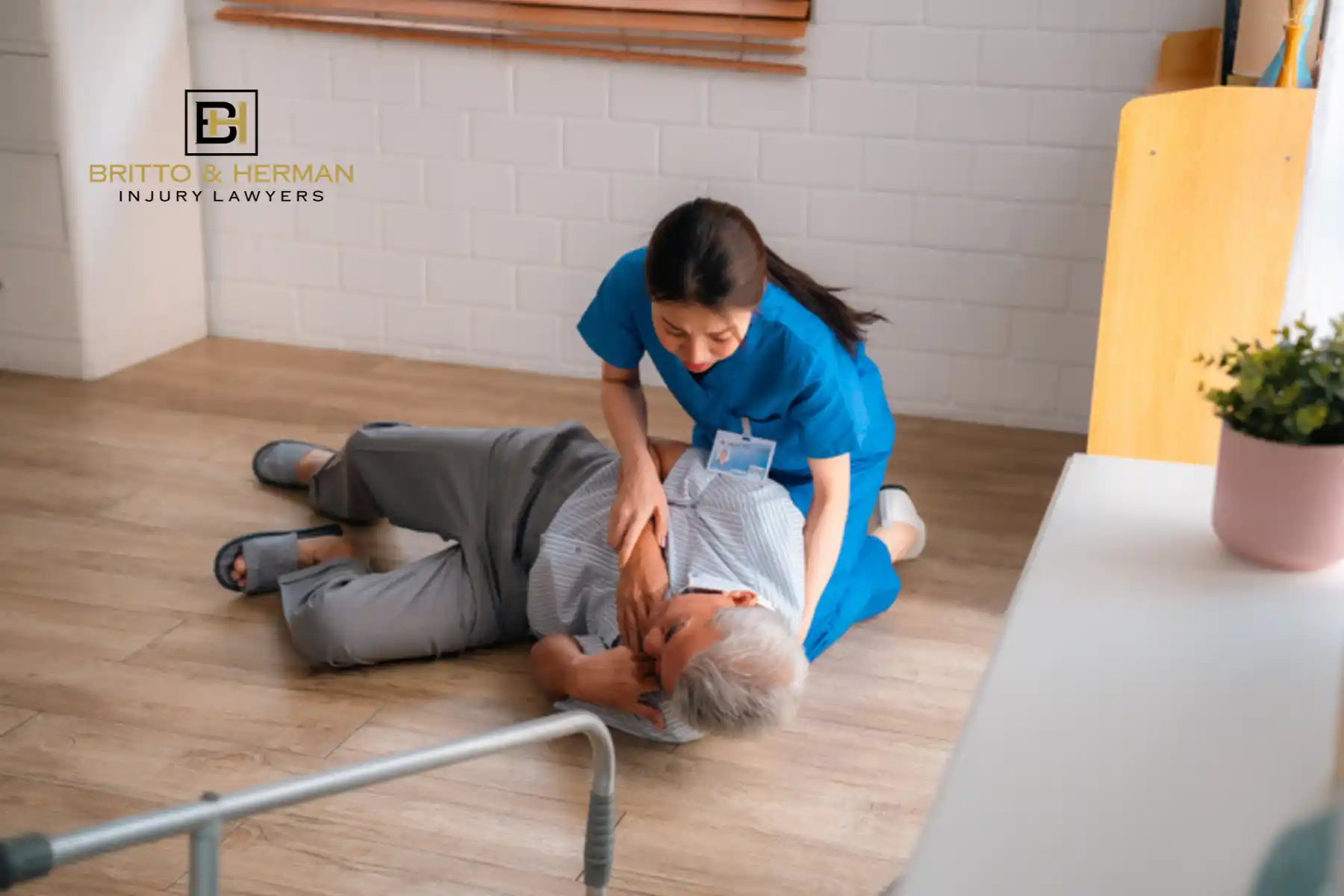
  • Can I Sue My Retirement Home if I Sustained Injuries from Slip and Fall in Florida?

    Can I Sue My Retirement Home if I Sustained Injuries from Slip and Fall in Florida?

    A slip and fall in a retirement home can leave you or your loved one facing more than just physical pain. It can disrupt your sense of security and lead to mounting medical expenses, lost independence, and unanswered questions about accountability.

    Whether you live in an independent living community, assisted living facility, or nursing home, these facilities have a duty to provide safe environments. When that duty is breached, Florida law offers a path to seek justice for injuries from slip and fall. In this blog, we’ll explain your rights under Florida law, discuss the evidence needed to support your claim, and guide you through the steps you can take to protect your rights and hold the facility accountable.

    Your Rights as a Resident

    Florida law requires retirement homes to provide a duty of care to their residents. In this blog, “retirement home” is used as a broad term that encompasses various senior living facilities, including independent living communities, assisted living facilities, and continuing care retirement communities. Each type of facility has unique responsibilities based on the services they offer:

    • Independent Living Communities: These facilities are governed primarily by general premises liability laws, which hold property owners responsible for maintaining safe environments for residents and visitors.
    • Assisted Living Facilities (ALFs): Regulated under Florida Statute § 429.28, ALFs must provide a safe and decent living environment, personal care services, and emergency protocols. In addition to these statutory obligations, premises liability laws apply to physical spaces such as hallways and dining areas.
    • Continuing Care Retirement Communities (CCRCs): These facilities offer a range of care levels, including independent living, assisted living, and skilled nursing. Premises liability applies to shared physical areas, while additional statutory protections may govern personal care or medical services provided in assisted living or skilled nursing environments.

    Regardless of the type of facility, senior living communities must maintain premises free from hazards, provide adequate lighting, respond promptly to maintenance issues, follow safety standards and train staff appropriately, and establish emergency protocols.

    If a facility fails to uphold these responsibilities and their negligence causes you harm, you may have grounds for a lawsuit under premises liability laws for common areas or other applicable negligence laws for hazards in private spaces.

    Common Causes of Slip and Fall Accidents

    Despite the legal duties these facilities owe to their residents, hazardous conditions can and do occur, often leading to slip and fall accidents that could have been prevented with proper care. Common causes are:

    • Wet floors from cleaning without proper warning signs
    • Poor lighting in hallways and common areas
    • Uneven walking surfaces or loose carpeting
    • Obstacles in walkways
    • Lack of proper handrails
    • Inadequate maintenance of outdoor walkways
    • Defective elevator or stair mechanisms
    • Spills in dining areas left unattended
    • Ice or water accumulation near entrances
    • Poorly maintained bathroom facilities

    These hazards pose unique dangers in retirement settings, where residents may have mobility challenges or rely on assistive devices.

    Proving Negligence in Your Case

    To hold a senior living facility responsible for your injuries, you must establish negligence. Under Florida Statute § 768.0755, you need to prove that the facility knew or should have known about the hazardous condition that caused your fall. This requirement applies to all types of senior living facilities, including independent living communities, ALFs, and CCRCs.

    One way to demonstrate negligence is by showing the facility had constructive knowledge of the hazard. Constructive knowledge means the hazard existed for a sufficient amount of time that the facility, through reasonable care, should have discovered and addressed it. For instance, if a spill in a dining area was left unattended for hours, the facility could be held responsible for failing to clean it up promptly.

    Actual knowledge, on the other hand, refers to the facility being directly aware of the hazard, such as when staff received a report or complaint about it. Evidence such as maintenance records, prior incident reports, witness statements, or security camera footage can help establish this critical element.

    How Fault is Determined

    Florida uses a modified comparative fault system (Florida Statute § 768.81), which allocates responsibility between the parties. If you are found more than 50% at fault, you cannot recover damages. Otherwise, your compensation will be reduced by your percentage of fault. For example, if you’re 20% at fault, your recovery will be reduced by 20%. Working with an attorney can help you minimize fault and build a strong case to maximize your compensation.

    Though understanding fault is essential, acting within Florida’s strict legal deadlines is equally important. Here’s what you need to know about the time limits and requirements for pursuing a claim.

    Time Limits and Legal Requirements

    As of March 24, 2023, Florida law reduced the statute of limitations for negligence-based personal injury claims, including slip and fall cases, from four years to two years. Under the updated Florida Statute § 95.11, you now have two years from the date of your accident to file a lawsuit against the responsible party.

    However, if the facility is government-operated, you must also meet specific notice requirements. Florida law requires notifying the appropriate government entity within six months of the incident. Failing to meet these deadlines can bar your claim entirely.

    Additionally, resident agreements with retirement facilities often include arbitration clauses. These clauses often favor the facility, restricting your ability to file a lawsuit in court. An attorney can review the agreement to determine whether arbitration is enforceable and how it may affect your ability to recover damages.

    Because these deadlines are strict and arbitration clauses can significantly impact your rights, consult an attorney as soon as possible to protect your claim.

    Steps to Take Now to Protect Your Rights

    Taking the right steps immediately after a fall can significantly impact the success of your claim. Here’s what you should do to protect your rights and build a strong case:

    • Request copies of all incident reports
    • Gather contact information from witnesses
    • Keep all medical records and bills
    • Take photos of your injuries and the hazard that caused your fall
    • Start a daily journal documenting your pain and limitations
    • Save receipts for all injury-related expenses
    • Preserve evidence, such as the shoes and clothing worn at the time of the fall
    • Avoid signing documents from the facility without legal review
    • Document all communication with staff or management.

    These steps can help build a strong case and protect your rights.

    When to Contact a Slip, Trip and Fall Lawyer

    Slip and fall cases in retirement homes often involve complex legal and medical issues. You should contact a slip, trip and fall lawyer immediately if:

    • Your injuries require ongoing medical treatment
    • The retirement home denies responsibility
    • Insurance adjusters pressure you for statements or quick settlements
    • Multiple parties might share liability (e.g., contractors or vendors). For example, maintenance companies or manufacturers of defective equipment could also be held liable.
    • Your injuries significantly impact your daily life
    • The facility claims you were at fault
    • You receive complex legal documents or settlement offers
    • The facility’s insurance company denies your claim

    An attorney can assist with arbitration clauses, identify all potentially liable parties, and represent you in negotiations or court.

    To sum up, in Florida, you have the right to hold a senior living facility accountable if their negligence caused your injuries from slip and fall. Acting quickly, preserving evidence, and consulting with a knowledgeable attorney can make all the difference in building a strong case. By understanding your legal options and taking the right steps, you can seek the compensation needed to address your injuries and move forward with confidence.

    Take Action Now After Your Slip and Fall

    A fall in a senior living facility can be a life-changing event, leaving you or your loved one with physical injuries, mounting medical bills, and emotional distress. Whether you’re recovering yourself or advocating for a loved one, you don’t have to face this burden alone.

    At Britto & Herman Injury Lawyers, we understand the challenges of slip and fall cases, especially when they involve vulnerable residents in senior living facilities. Led by Board Certified Trial Lawyer Daniel Britto, Esq., and Michael S. Herman, Jr., Esq., our firm is focused on holding negligent facilities accountable and securing the financial relief and justice you need to move forward.

    We’ll help you every step of the way—gathering evidence, dealing with insurance adjusters, and advocating for your rights so that the full extent of the harm caused is recognized. Whether you need support for yourself or on behalf of a loved one, our attorneys are here to provide the legal guidance you need.

    If you’ve been searching online for a “trip and fall lawyer” or “personal injury lawyer near me,” contact us instead. Call us today at [phone_number dsk_contact=’true’/] or complete our confidential online form to schedule a free consultation. Our office at 1001 W. Indiantown Road in Jupiter is ready to assist you, and we’re available around the clock to address your concerns.

    Don’t wait to protect your rights and seek justice—call today to take the first step toward recovery.

    Copyright © 2024. Britto & Herman Injury Lawyers. All rights reserved.

    The information in this blog post (“post”) is provided for general informational purposes only and may not reflect the current law in your jurisdiction. No information in this post should be construed as legal advice from the individual author or the law firm, nor is it intended to be a substitute for legal counsel on any subject matter. No reader of this post should act or refrain from acting based on any information included in or accessible through this post without seeking the appropriate legal or other professional advice on the particular facts and circumstances at issue from a lawyer licensed in the recipient’s state, country, or other appropriate licensing jurisdiction.

    Britto & Herman Injury Lawyers
    1001 W Indiantown Rd., Suite 101
    Jupiter, FL 33458
    [phone_number dsk_contact=’true’/]
    https://staging.brittoherman.com/

  • What Information Do You Exchange in a Car Accident in Florida?

    What Information Do You Exchange in a Car Accident in Florida?

    Florida’s roads can be unpredictable, with a diverse mix of long-term residents, seasonal visitors, tourists, and retirees all sharing the streets. Whether you’re navigating busy city intersections or cruising along coastal highways, being prepared for the unexpected is crucial.

    If you’re involved in a crash you might wonder: “What information do you exchange in a car accident?” Knowing what information to exchange can significantly impact the outcome of any legal or insurance proceedings that follow. In this blog, we’ll cover the essential details to gather at the scene of an accident in Florida, ensuring you’re well-prepared to protect your interests.

    Understanding these requirements not only helps you comply with Florida law but also provides a solid foundation for any claims or legal actions that may follow. Let’s explore the key information you should exchange in the aftermath of a collision on Florida’s roads.

    Stay Calm and Ensure Safety First

    Before exchanging any information, prioritize safety. If anyone is injured, call 911 immediately. Move your vehicle out of traffic if possible, and turn on your hazard lights to alert other drivers. Ensuring everyone is safe is your first responsibility at the scene of an accident.

    Call the Police

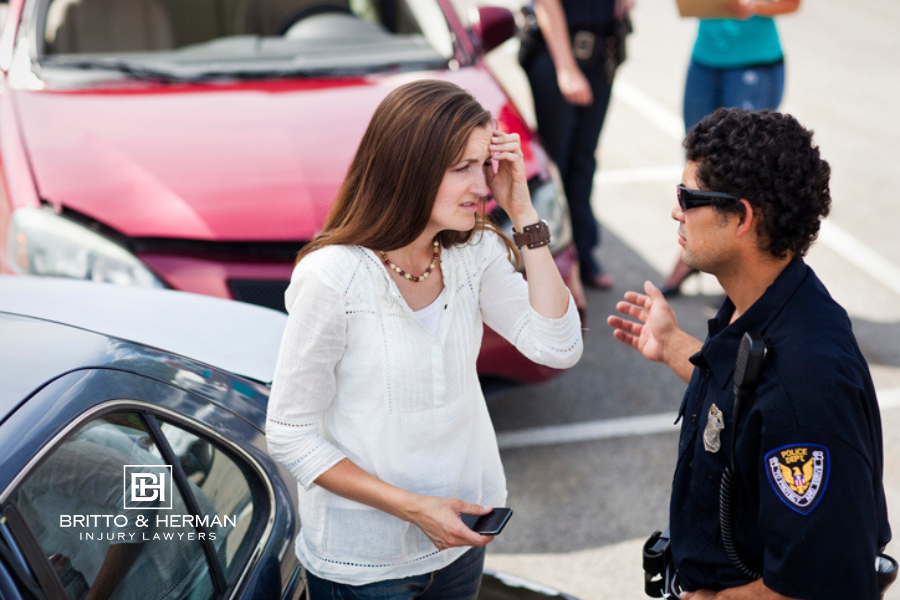
    In Florida, you are required to report any accident that results in injury, death, or property damage exceeding $500. Even if the damage seems minor, the costs of repairs can add up, so it’s usually best to report the accident. Additionally, having a police report can be invaluable when filing insurance claims or dealing with potential legal disputes.

    The responding officer will document the necessary details and provide you with a case number or incident number. You can use this number to obtain a copy of the police report later, which will be essential for your insurance claim. This report serves as an official record of what occurred and helps establish the facts of the accident.

    Exchange Basic Contact Information

    Once safety is assured and the police have been called, it’s time to exchange contact information with the other driver(s) involved. Be sure to collect and the following details from the other driver(s):

    • Full name
    • Phone number
    • Address
    • Email address

    You should also provide your own contact details to the other driver(s). Taking down this basic information accurately is essential for both your insurance company and for any follow-up that might be needed.

    Gather Insurance Information

    Insurance information is critical for settling claims. Be sure to collect the following details from the other driver(s):

    • Name of their insurance company
    • Policy number
    • Contact information for their insurance company (if available)

    Provide your own insurance details in return. The name of the insurance company and the policy number are the most important pieces of information to exchange. This will help ensure a smoother claims process after the accident.

    Document Vehicle Information

    Gathering information about the vehicles involved will assist in filing your insurance claim. Be sure to note:

    • Make, model, and year of each vehicle
    • License plate numbers
    • Vehicle Identification Numbers (VIN) – this can usually be found on the driver’s side dashboard or door jamb.

    Collect Witness Information

    If there are any independent witnesses to the accident, try to get their contact information. Their perspective could be crucial if there is any dispute about how the accident occurred. Independent witnesses (people not involved in the accident) tend to be more reliable.

    Take Photos and Notes

    Documenting the scene of the accident can be invaluable for your insurance claim or any legal proceedings. Use your smartphone to capture:

    • Photos of damage to all vehicles involved
    • The overall accident scene, including street signs or landmarks
    • Visible injuries, if any

    It’s also helpful to take notes about the accident while the details are still fresh in your mind. Include specifics like:

    • Date and time of the accident
    • Weather and road conditions
    • Your recollection of how the accident occurred

    The more detailed your notes, the better prepared you’ll be for future discussions with insurance adjusters or attorneys.

    Obtain the Police Officer’s Information

    If law enforcement responds to the scene, be sure to collect the following:

    • The officer’s name and badge number
    • The police report number
    • Instructions on how to obtain a copy of the report

    This official documentation will be important for your insurance claim and any legal actions.

    What Not to Do

    While it’s important to gather information, there are a few things you should avoid doing:

    • Don’t admit fault or apologize – Even casual statements like “I’m sorry” can be interpreted as admitting fault. Let the police and insurance companies determine who is responsible.
    • Don’t discuss the details of the accident beyond exchanging necessary information with the other driver. Keep conversations brief and factual.
    • Don’t sign any documents unless they’re from law enforcement or your insurance agent.
    • Never leave the scene without exchanging information, as doing so could be considered a hit-and-run, which carries severe penalties in Florida, including fines, license suspension, or even jail time, depending on the severity of the accident.

    After the Accident

    Once you’ve gathered all the necessary information, follow these steps to protect your interests:

    • Contact your insurance company as soon as possible to report the accident and begin the claims process. In Florida, which follows a no-fault system, your Personal Injury Protection (PIP) insurance will cover your injuries regardless of who caused the accident, up to a certain limit.
    • Seek medical attention even if you feel fine. Injuries like whiplash or concussions may not show up immediately, so it’s important to get checked by a medical professional.
    • Keep all documents and information related to the accident, including medical records, insurance communications, and any police reports, in a safe place for future reference.

    Promptly reporting the accident to your insurance company ensures you receive PIP benefits and any other applicable coverage to address your injuries and damages.

    Gathering the right information after a car accident in Florida is essential to protecting your rights and ensuring a smooth claims process. By staying calm, following the proper steps, and being thorough with the details you collect, you set yourself up for a more straightforward resolution with insurance companies and any legal issues that may arise. A little preparation can make all the difference when it comes to safeguarding your interests after an accident.

    Injured in a Florida Car Accident? Get the Support You Need

    You’ve gathered the necessary information after your accident, but now you’re faced with mounting medical bills and lost wages due to someone else’s careless driving. The road to recovery can be challenging, especially when dealing with insurance companies and legal procedures.

    At Britto & Herman Injury Lawyers, we understand the complexities of Florida car accident cases. Our team, led by Board Certified Trial Lawyer Daniel Britto, Esq. and his partner Michael S. Herman, Jr., Esq., has a track record of successfully representing injured drivers like you. As experienced car accident lawyers, we know how to make the most of the information you’ve collected.

    We can help you navigate the legal process, ensuring all the information you’ve collected is used effectively to support your case. From dealing with insurance adjusters to calculating the full extent of your damages, we’ll be by your side every step of the way. When you’re searching for a “personal injury lawyer near me,” look no further than our dedicated team.

    Don’t let the stress of handling a legal claim interfere with your recovery. Reach out to us at (561) 835-5555 or use our confidential online form to schedule a free consultation. Our office at 1001 W. Indiantown Road in Jupiter is ready to welcome you, and we’re available around the clock to address your concerns.

    Time is crucial in injury cases, so don’t delay. One conversation with Britto & Herman Injury Lawyers could be the turning point in your recovery journey. Let us put our skills as your lawyer for auto accidents to work for you while you focus on getting better.

    Copyright © 2024. Britto & Herman Injury Lawyers. All rights reserved.

    The information in this blog post (“post”) is provided for general informational purposes only and may not reflect the current law in your jurisdiction. No information in this post should be construed as legal advice from the individual author or the law firm, nor is it intended to be a substitute for legal counsel on any subject matter. No reader of this post should act or refrain from acting based on any information included in or accessible through this post without seeking the appropriate legal or other professional advice on the particular facts and circumstances at issue from a lawyer licensed in the recipient’s state, country, or other appropriate licensing jurisdiction.

    Britto & Herman Injury Lawyers
    1001 W Indiantown Rd., Suite 101
    Jupiter, FL 33458
    (561) 835-5555
    https://staging.brittoherman.com/
  • Do You Have to Call the Police After an Accident in Florida?

    Do You Have to Call the Police After an Accident in Florida?

    You’re cruising down a palm-lined Florida street, enjoying the sunshine and coastal breeze. Suddenly, the screech of tires breaks the calm, and you find yourself in a fender bender. As you step out of your car, a thousand thoughts race through your mind. Among them is a crucial question: “Do you have to call the police after an accident?” It’s a common dilemma faced by many Florida drivers, and the answer isn’t always straightforward. In the next few minutes, we’ll unpack this question and guide you through the ins and outs of Jupiter car accident reporting in the Sunshine State.

    Florida’s Accident Reporting Laws

    Florida law doesn’t require you to call the police for every fender bender, but there are specific situations where contacting law enforcement isn’t just recommended—it’s mandatory. According to Florida Statutes Section 316.065, you must report an accident to the police if:

    • There are injuries or fatalities
    • A vehicle needs to be towed from the scene
    • The accident involves a commercial vehicle
    • There’s suspicion of drunk driving
    • One of the drivers leaves the scene (hit and run)
    • There’s significant property damage, of at least $500

    It’s important to note that assessing property damage, especially in the immediate aftermath of a crash, can be difficult. What may seem like minor damage at first glance could exceed the $500 threshold once a closer inspection is done. Given this uncertainty, when in doubt, it’s safer to call the police and have the accident documented properly to avoid any legal issues later.

    Even if your situation doesn’t fall into these categories, calling the police can still be a wise decision. Let’s explore why.

    Benefits of Calling the Police After an Accident

    Creating an Official Record

    When you call the police after an accident, they create an official accident report. This document can be invaluable for several reasons:

    • It provides an unbiased account of the incident
    • It includes important details you might forget later
    • It can help with insurance claims
    • It may be crucial if you need to take legal action later

    Remember, in the stress of an accident, you might miss important details. A police officer is trained to gather all relevant information systematically.

    Facilitating Evidence Collection

    Police officers are experienced in collecting and documenting evidence at accident scenes. They can:

    • Take photographs of the damage and accident scene
    • Interview witnesses and collect their contact information
    • Note road and weather conditions
    • Identify and document any traffic violations that may have contributed to the accident

    This evidence can be critical if there’s a dispute about who was at fault or if you need to make an insurance claim.

    What to Do While Waiting for the Police

    If you’ve decided to call the police, there are several steps you should take while waiting for them to arrive:

    • Ensure your safety: If possible, move your vehicle to a safe location out of traffic
    • Check for injuries: Make sure everyone involved is okay. If there are injuries, call 911 immediately
    • Exchange information: Get the name, contact details, and insurance information of all parties involved
    • Document the scene: If it’s safe to do so, take photos of the vehicles, damage, and surrounding area
    • Find witnesses: If there are any witnesses, ask for their contact information
    • Don’t admit fault: Even if you think you might be responsible, avoid saying so. Florida follows a comparative fault system, meaning fault can be divided between drivers. Let the police and insurance companies determine fault

    When You Might Not Need to Call the Police

    For minor accidents with no injuries and minimal property damage (under $500), you might choose not to involve the police. In these cases:

    • Exchange information with the other driver(s)
    • Take plenty of photos of the damage and accident scene
    • File a report with your insurance company as soon as possible

    However, keep in mind that what seems like minor damage could turn out to be more serious upon closer inspection. Injuries like whiplash or hidden vehicle damage might not be immediately obvious. When in doubt, it’s often better to err on the side of caution and call the police. Some insurance companies also require a police report to process claims, so be sure to check your policy requirements.

    The Importance of Timely Reporting

    If you don’t call the police at the scene, you’re not necessarily off the hook for reporting the accident. Under Florida Statutes Section 316.066, you must report any crash resulting in injury, death, or property damage over $500 within 10 days. You can do this by filing a Driver Report of Traffic Crash (Self Report) with the Florida Department of Highway Safety and Motor Vehicles (FLHSMV).

    Failing to report an accident when required can result in serious consequences, including fines and potential license suspension. It’s always better to report an accident you’re unsure about than to risk the penalties of not reporting one you should have.

    While you don’t always have to call the police after an accident in Florida, doing so can provide valuable protection and documentation. If there are injuries, significant damage, or any doubt about the severity of the accident, it’s wise to involve law enforcement. Remember, the immediate aftermath of an accident can be chaotic and stressful. Having a police officer on the scene can help ensure that all necessary information is collected and documented properly, potentially saving you from headaches down the road. Stay safe on those Florida roads, and remember: when in doubt, it’s better to make the call.

    Searching Online for a “Personal Injury Lawyer Near Me?”

    Your search ends here. If you’re looking for a personal injury lawyer after a car accident in Florida, you’re likely dealing with injuries, pain, and a host of unanswered questions. You might be wondering if you made the right choice about calling the police, or if it’s too late to file a report. These concerns shouldn’t burden you while you’re trying to recover.

    At Britto & Herman Injury Lawyers, we understand the challenges you’re facing. Our team, led by Board Certified Trial Lawyer Daniel Britto, Esq. and his partner Michael S. Herman, Jr., Esq., has extensive experience helping injured Florida drivers like you. We know the intricacies of Florida’s accident reporting laws and how they can impact your injury claim.

    Whether you called the police or not, we can help protect your rights and pursue the compensation you need for your recovery. Our Jupiter car accident lawyer team can guide you through the next steps, deal with insurance companies on your behalf, and ensure that all necessary documentation is in order.

    Don’t let uncertainty about police involvement or accident reporting jeopardize your injury claim. Take the first step towards peace of mind and proper compensation. Call us at [phone_number dsk_contact=’true’/] or fill out our confidential online form to schedule a free consultation. Our office is conveniently located at 1001 W. Indiantown Road in Jupiter, and we’re available 24/7 to assist you.

    Remember, time is critical in injury cases. The sooner you reach out, the sooner we can start addressing your concerns and protecting your interests. One call to Britto & Herman Injury Lawyers could make a significant difference in your recovery journey.

    Let us handle the legal complexities while you focus on healing. Contact us today and get the support and guidance you need after your accident.

    Copyright © 2024. Britto & Herman Injury Lawyers. All rights reserved.

    The information in this blog post (“post”) is provided for general informational purposes only and may not reflect the current law in your jurisdiction. No information in this post should be construed as legal advice from the individual author or the law firm, nor is it intended to be a substitute for legal counsel on any subject matter. No reader of this post should act or refrain from acting based on any information included in or accessible through this post without seeking the appropriate legal or other professional advice on the particular facts and circumstances at issue from a lawyer licensed in the recipient’s state, country, or other appropriate licensing jurisdiction.

    Britto & Herman Injury Lawyers
    1001 W Indiantown Rd., Suite 101
    Jupiter, FL 33458
    [phone_number dsk_contact=’true’/]
    https://staging.brittoherman.com/
  • What You Need to Know About Florida Bicycle Laws

    What You Need to Know About Florida Bicycle Laws

    Cycling in Florida is an enjoyable way to get around, whether you’re commuting, exercising, or just exploring the beautiful scenery. But before you hit the road, it’s important to understand Florida bicycle laws to ensure your safety and the safety of others. Florida has specific regulations that every cyclist must follow. This blog will walk you through the key laws and responsibilities you need to know to cycle legally and confidently in the Sunshine State.

    Your Rights on the Road

    In Florida, a bicycle is legally considered a vehicle. This means that as a cyclist, you have the same rights as drivers of motor vehicles. You are entitled to use the road, and vehicles must share the road with you. However, with these rights come certain responsibilities. For instance, when you’re riding on the road, you must obey all traffic signals and signs, just as any other vehicle would.

    One of the most critical rights you have as a cyclist is the right to use a full lane if necessary. Florida law allows you to leave the bike lane or the right side of the road under specific circumstances, such as to avoid hazards, prepare for a left turn, or if the lane is too narrow for a car and bicycle to share safely. This ensures that you can navigate the roads safely without being squeezed by passing vehicles.

    Staying Safe: Your Responsibilities

    While cycling on Florida roads, you must adhere to certain safety rules. For instance, your bicycle must be equipped with a white front light that is visible from at least 500 feet and a red rear light visible from 600 feet if you are riding between sunset and sunrise. These lights are crucial for ensuring that you are visible to other road users during low-light conditions.

    Helmet use is another important safety measure. In Florida, cyclists under the age of 16 are required by law to wear a helmet. However, it’s a good idea for all cyclists, regardless of age, to wear one. A helmet can protect you from serious head injuries in case of an accident.

    Moreover, your bike must have working brakes that can stop the bike within 25 feet when riding at a speed of 10 mph. This is particularly important for preventing accidents, especially in busy areas or on steep descents.

    Riding on Sidewalks and Crosswalks

    Florida law generally allows cyclists to ride on sidewalks, but local ordinances can vary. In some cities, riding on the sidewalk may be prohibited, so it’s important to check local rules before you do so. When you are riding on a sidewalk, you have the same rights and responsibilities as pedestrians. This means you must yield to pedestrians and give an audible signal before passing them from behind.

    Additionally, intersections are always considered crosswalks, even if they are not marked as such. When crossing at intersections, whether on a bike or on foot, make sure to do so safely and be aware of turning vehicles.

    Shared-Use Paths and E-Bikes

    Florida boasts many shared-use paths that are perfect for cycling. These paths are separated from motor vehicle traffic, making them a safer option for cyclists. However, some paths may have specific rules, such as speed limits or restrictions on e-bikes, so it’s essential to look for signs or check with the local municipality before riding.

    E-bikes are becoming increasingly popular in Florida, and the state has specific regulations regarding their use. E-bikes are classified into three categories based on their speed and motor capabilities. It’s important to know the class of your e-bike and follow the relevant rules, especially regarding where you can ride and how fast you can go. For instance, certain shared-use paths may not allow Class 2 or Class 3 e-bikes due to their higher speeds.

    Local vs. State Laws

    While Florida has statewide bicycle laws, local governments can impose additional regulations. This means that some rules, such as those regarding sidewalk riding or e-bike usage, can vary from one city to another. Always be aware of the local laws in the area where you are riding to avoid any legal issues.

    Key Takeaways

    • Equal Rights on the Road: In Florida, cyclists have the same rights as motor vehicle drivers, including the right to use a full lane when necessary for safety.
    • Safety First: Equip your bike with proper lights for night riding, wear a helmet (especially if you’re under 16), and ensure your brakes are in good working order.
    • Sidewalk and Crosswalk Etiquette: You can generally ride on sidewalks, but always yield to pedestrians and give an audible signal before passing.
    • Shared-Use Paths and E-Bikes: Know the specific rules for shared-use paths and e-bikes, including speed limits and where e-bikes are permitted.
    • Stay Informed Locally: Local laws may vary, so always check the specific regulations in the area where you plan to ride.

    These key points will help you navigate Florida’s bicycle laws confidently and safely, ensuring a positive experience on your rides.

    Cycling in Florida can be a safe and enjoyable experience if you are aware of the laws and follow them diligently. Remember, you have the right to use the road, but with that right comes the responsibility to obey traffic laws and ensure your safety and the safety of others. Whether you’re on a roadway, sidewalk, or shared-use path, knowing the rules will help you ride confidently and legally.

    Britto & Herman Injury Lawyers – The Voice for Florida Injury Victims

    Despite following all safety protocols, a bicycle accident caused by someone else’s negligence can leave you dealing with serious injuries, mounting medical bills, and uncertainty about the future. You don’t have to face this alone. At Britto & Herman Injury Lawyers, our team is here to help. As your local “bicycle accident attorneys near me,” we understand the complexities of Florida’s bicycle laws and are committed to fighting for the compensation you need. Our compassionate team, led by Board Certified Trial Lawyer Daniel Britto, Esq. and his partner Michael S. Herman, Jr., Esq., is ready to stand by your side and fight for compensation for your injuries.

    As Florida bicycle accident lawyers, we know how to handle insurance companies that may try to minimize your claim. Your recovery is our priority, and we’re ready to start building your case today. Contact us at [phone_number dsk_contact=’true’/] or fill out our confidential online form to schedule a free consultation with a Jupiter personal injury attorney at our office located at 1001 W. Indiantown Road. We’re available 24/7 to assist you.

    Don’t wait—time is critical in bicycle accident cases. Reach out now so we can start protecting your rights and helping you focus on what matters most—your recovery. Let Britto & Herman Injury Lawyers stand by your side. One call could make all the difference.

    Copyright © 2024. Britto & Herman Injury Lawyers. All rights reserved.

    The information in this blog post (“post”) is provided for general informational purposes only and may not reflect the current law in your jurisdiction. No information in this post should be construed as legal advice from the individual author or the law firm, nor is it intended to be a substitute for legal counsel on any subject matter. No reader of this post should act or refrain from acting based on any information included in or accessible through this post without seeking the appropriate legal or other professional advice on the particular facts and circumstances at issue from a lawyer licensed in the recipient’s state, country, or other appropriate licensing jurisdiction.

    Britto & Herman Injury Lawyers
    1001 W Indiantown Rd., Suite 101
    Jupiter, FL 33458
    [phone_number dsk_contact=’true’/]
    https://staging.brittoherman.com/

  • 5 Common Causes of Motorcycle Accidents in Jupiter, Florida

    5 Common Causes of Motorcycle Accidents in Jupiter, Florida

    As you cruise down the sun-drenched streets of Jupiter, Florida, the wind in your hair and the roar of your motorcycle’s engine beneath you, it’s easy to feel invincible. But the harsh reality is that motorcycle accidents can happen in an instant, often with devastating consequences. Understanding the common causes of these accidents can help you stay safe on the roads and potentially save your life.

    In Jupiter, where the beautiful weather encourages year-round riding, motorcyclists face unique challenges. From distracted drivers to hazardous road conditions, numerous factors can contribute to a serious accident. Let’s explore the five most common causes of motorcycle accidents in this picturesque Florida town, and learn how you can protect yourself while enjoying the freedom of the open road.

    1. Distracted Driving

    In today’s connected world, distracted driving has become an epidemic, and it’s particularly dangerous for motorcyclists. You’ve probably seen it countless times – drivers checking their phones, adjusting their GPS, or even eating while behind the wheel. These seemingly small distractions can have catastrophic consequences when a motorcycle is involved.

    When a driver takes their eyes off the road for just a few seconds, they may fail to notice a motorcyclist changing lanes or slowing down. This lack of attention can lead to rear-end collisions, sideswipes, or even head-on crashes. As a motorcyclist, you’re more vulnerable to injury in these situations due to your lack of protection compared to those in enclosed vehicles.

    To protect yourself, always assume that other drivers aren’t paying attention. Stay alert, maintain a safe following distance, and try to position yourself where you’re most visible to other motorists. Consider wearing bright or reflective gear to increase your visibility, especially during dawn, dusk, or nighttime rides.

    2. Left-Turn Accidents

    One of the most dangerous scenarios for motorcyclists occurs when a car makes a left turn at an intersection. Often, drivers fail to see an oncoming motorcycle or misjudge its speed, leading to a collision. These accidents can be particularly severe, as they often result in the motorcyclist being thrown from their bike.

    In Jupiter, where many intersections are busy with both local traffic and tourists, this danger is ever-present. To reduce your risk, approach intersections with caution, even when you have the right of way. Watch for vehicles waiting to turn left, and be prepared to take evasive action if necessary. Slowing down slightly as you enter an intersection can give you precious extra seconds to react if a driver suddenly turns in front of you.

    3. Speeding and Reckless Driving

    The thrill of the ride can sometimes tempt you to push the limits, but speeding and reckless driving significantly increase your risk of an accident. In Jupiter, where long stretches of coastal roads can seem inviting for a high-speed ride, it’s crucial to resist this urge.

    Excessive speed reduces your reaction time and increases the severity of injuries in the event of a crash. It also makes it harder for other drivers to accurately judge your approach, potentially leading to misjudgments and collisions.

    Remember, the goal is to enjoy the ride and arrive safely at your destination. Obey posted speed limits and adjust your speed according to road and weather conditions. Avoid aggressive maneuvers like weaving between lanes or tailgating, which can startle other drivers and lead to accidents.

    4. Impaired Driving

    Jupiter’s vibrant nightlife and beach culture can sometimes lead to impaired driving incidents. Whether it’s alcohol, drugs, or even certain medications, impaired driving poses a serious threat to everyone on the road, especially motorcyclists.

    As a motorcyclist, you need all your faculties to operate your bike safely. Impairment affects your judgment, reaction time, and coordination – all critical skills for motorcycle riding. But it’s not just your own potential impairment you need to worry about. Other drivers who are under the influence may have difficulty seeing or properly reacting to a motorcycle on the road.

    Always ride sober, and be extra cautious during times when impaired driving is more common, such as weekend nights or during local events and festivals. If you plan to drink, arrange for alternative transportation. Your life is worth far more than the inconvenience of leaving your motorcycle behind for a night.

    5. Hazardous Road Conditions

    While Jupiter’s weather is generally favorable for riding, sudden rain showers, debris on the road, or poorly maintained surfaces can create hazardous conditions for motorcyclists. Wet roads reduce traction, making it easier to lose control of your bike. Potholes, gravel, or other debris can cause you to swerve unexpectedly or even crash.

    Stay informed about weather conditions before you ride, and be prepared to adjust your plans if necessary. When riding, scan the road ahead for potential hazards and maintain a speed that allows you to react safely. If you encounter unexpected bad weather or dangerous road conditions, don’t hesitate to pull over and wait it out.

    By understanding these common causes of Jupiter motorcycle accidents, you can take proactive steps to protect yourself. Remember, your safety is paramount. While the freedom and exhilaration of motorcycle riding are unparalleled, they come with a responsibility to ride defensively and remain vigilant at all times.

    Whether you’re a local enjoying your daily commute or a visitor taking in the beauty of Jupiter’s coastline, stay safe, stay alert, and enjoy the ride. Your loved ones are counting on you to return home safely after every journey.

    Have You Been Injured in a Motorcycle Accident Due to Another’s Negligence?

    You never thought it would happen to you. One moment, you were enjoying the freedom of the open road on your motorcycle. The next moment, you’re facing the painful aftermath of an accident caused by someone else’s negligence. The physical injuries are just the beginning – now you’re dealing with mounting medical bills, lost wages, and the stress of navigating a complex legal system.

    But you don’t have to face this challenging journey alone. At Britto & Herman Injury Lawyers, our Florida motorcycle accident lawyers understand the unique struggles that motorcycle accident victims face. Our compassionate team, led by Board Certified Trial Lawyer Daniel Britto, Esq. and his partner Michael S. Herman, Jr., Esq., is ready to stand by your side and fight for compensation for your injuries.

    Don’t let insurance companies pressure you into accepting a lowball offer. Your recovery – both physical and financial – is too important. Reach out to us today at (561) 835-5555 or fill out our online form to schedule your free consultation with a Jupiter personal injury lawyer. Our Jupiter office at 1001 W. Indiantown Road is ready to welcome you, and we’re available 24/7 to address your concerns.

    Remember, time is critical in motorcycle accident cases. The sooner you contact us, the sooner we can start building your case and protecting your rights. Let us handle the legal complexities while you focus on what matters most – your recovery.

    You’ve been through enough already. Let Britto & Herman Injury Lawyers guide you towards justice and compensation. Your road to recovery starts with one call – make it today.

    Copyright © 2024. Britto & Herman Injury Lawyers. All rights reserved.

    The information in this blog post (“post”) is provided for general informational purposes only and may not reflect the current law in your jurisdiction. No information in this post should be construed as legal advice from the individual author or the law firm, nor is it intended to be a substitute for legal counsel on any subject matter. No reader of this post should act or refrain from acting based on any information included in or accessible through this post without seeking the appropriate legal or other professional advice on the particular facts and circumstances at issue from a lawyer licensed in the recipient’s state, country, or other appropriate licensing jurisdiction.

    Britto & Herman Injury Lawyers
    1001 W Indiantown Rd., Suite 101
    Jupiter, FL 33458
    (561) 835-5555
    https://staging.brittoherman.com/