
Category: Injury Blog

Your blog category

  • Experienced Boating Accident Lawyers Share 5 Tips to Make Boating Safer and Enjoyable in Jupiter, Florida

    Experienced Boating Accident Lawyers Share 5 Tips to Make Boating Safer and Enjoyable in Jupiter, Florida

    As a boating enthusiast in Jupiter, Florida, you know that there’s nothing quite like the feeling of the sun on your face and the wind in your hair as you navigate the beautiful waters surrounding Jupiter. However, as experienced boating accident lawyers, we’ve seen firsthand how a day of fun can quickly turn into a nightmare if proper safety measures aren’t taken.

    To ensure that your time on the water remains enjoyable and incident-free, we’ve compiled five essential tips to help you stay safe while boating in Jupiter, Florida. But first, let’s take a closer look at what makes Jupiter’s waterways so special and what you need to know to navigate them safely.

    Exploring Jupiter’s Waterways

    Jupiter, Florida, is a popular destination for boaters, thanks to its stunning waterways and diverse aquatic ecosystems. Here are some key features of Jupiter’s waterways:

    • Intracoastal Waterway: Jupiter is situated along the Intracoastal Waterway, a 3,000-mile inland waterway that offers calm waters and scenic views, perfect for leisurely cruising.
    • Jupiter Inlet: The Jupiter Inlet connects the Intracoastal Waterway to the Atlantic Ocean, providing access to open waters for fishing, diving, and other activities. However, the inlet can be challenging to navigate due to strong currents and shifting sandbars, so caution is advised.
    • Loxahatchee River: This designated National Wild and Scenic River flows through Jupiter and offers opportunities for paddling, fishing, and wildlife viewing, with a chance to spot manatees, otters, and various bird species.
    • Jupiter Sandbar: Located just inside the Jupiter Inlet, the Jupiter Sandbar is a popular spot for boaters to anchor, swim, and socialize. However, it’s important to be mindful of the tides and to avoid disturbing the natural habitat.
    • Fishing and Diving: Jupiter’s waters are home to a wide variety of fish species, making it a popular destination for both inshore and offshore fishing. The reefs and wrecks off Jupiter’s coast also offer excellent diving opportunities.

    When boating in Jupiter, it’s essential to be aware of the unique challenges posed by the area’s waterways, such as strong currents, shallow areas, and shifting sandbars. By staying informed and following local boating regulations, you can safely enjoy all that Jupiter’s waters have to offer. Now, let’s dive into our five tips for safe and enjoyable boating in Jupiter, Florida.

    1. Always Wear a Life Jacket

    Wearing a life jacket at all times is one of the most crucial steps you can take to ensure your safety while boating. The U.S. Coast Guard reports that drowning is the leading cause of death in boating accidents, and wearing a life jacket can significantly reduce this risk.

    The Florida Fish and Wildlife Conservation Commission (FWC) requires that all boats have at least one U.S. Coast Guard-approved life jacket (also known as a personal flotation device or PFD) for each person on board. These life jackets must be in good condition, readily accessible, and of the appropriate size for the intended wearer. Children under 6 years old are required to wear a life jacket at all times while on a boat under 26 feet long that is underway.

    Make sure your life jacket fits properly and is in good condition, and ensure that every passenger on your boat, especially children, is also wearing one. By following these simple guidelines and adhering to Florida’s life jacket laws, you can greatly enhance your safety while enjoying Jupiter’s beautiful waterways.

    2. Check Weather Conditions Before Heading Out

    Before setting out on your boating adventure, always check the weather forecast. Jupiter is known for its beautiful weather, but conditions can change quickly, especially during the summer months when thunderstorms are common.

    If the forecast calls for severe weather, such as high winds or lightning, it’s best to postpone your trip until conditions improve. While on the water, keep an eye on the sky and be prepared to head back to shore if the weather takes a turn for the worse.

    3. Maintain Your Boat and Carry Required Safety Equipment

    Regular maintenance is essential to ensure that your boat is in top condition and ready for any situation. Before each outing, perform a thorough check of your vessel, including the engine, fuel lines, and electrical systems.

    In addition to regular maintenance, it’s crucial to ensure that you have all the required safety equipment on board. According to the FWC, the following safety equipment is required by law:

    • Life jackets (one per person on board)
    • Sound-producing device (whistle, horn, or bell)
    • Fire extinguisher (for boats with enclosed fuel or engine spaces)
    • Visual distress signals (flares, flags, or lights)
    • Navigation lights (for operation at night or in low visibility)

    Ensure that all safety equipment is in good working order, easily accessible, and that everyone on board knows how to use it. Regular servicing by a qualified mechanic can help identify and address any potential issues before they become serious problems on the water.

    4. Meet Florida’s Boating Education Standards

    Although Florida doesn’t issue traditional boating licenses, the state has specific boating education requirements that vary based on age and residency. If you were born on or after January 1, 1988, and plan to operate a boat with a motor of 10 horsepower or more in Florida, you must complete an approved boating safety course and carry a boating education ID card along with a photo ID.

    Out-of-state boaters visiting Florida can meet the education requirements by providing proof of completion of a boating safety course or equivalent exam that satisfies Florida’s standards. This proof is typically in the form of a certificate or card.

    Visitors who wish to rent a boat in Florida can obtain a temporary boating certificate from approved vendors throughout the state. These certificates are valid for 90 days and serve as a short-term alternative to the Boating Safety Education Identification Card. For a list of approved vendors, check the Florida Fish and Wildlife Conservation Commission’s website.

    Regardless of whether you are legally required to complete a boating education course, it is always a good idea to further your knowledge and skills by taking one. These courses cover essential topics such as navigation rules, emergency procedures, and weather patterns, helping you become a more responsible and prepared boater.

    5. Practice Safe Boating Habits

    In addition to the tips mentioned above, there are several safe boating habits you should practice every time you’re on the water. These include:

    • Avoiding alcohol consumption while operating a boat
    • Maintaining a safe speed and following posted speed limits
    • Keeping a safe distance from other boats and water hazards
    • Using navigation lights during low visibility conditions
    • Having a float plan and letting someone know your intended route and return time

    By adopting these safe boating habits, you’ll be better prepared to handle any situation that may arise while on the water.

    What to Do If You’re Involved in a Boating Accident

    Despite your best efforts to stay safe, accidents can still happen due to the negligence of other boaters. If you find yourself involved in a boating accident, it’s essential to take the following steps:

    • Ensure the safety of everyone involved and call for medical assistance if needed.
    • Contact the authorities, such as the U.S. Coast Guard or local law enforcement, to report the accident.
    • Document the scene by taking photos of the damage and obtaining contact information from witnesses.
    • Seek legal advice from experienced boating accident lawyers who can help protect your rights and guide you through the process of seeking compensation for any damages or injuries.

    Remember, the sooner you take action following a boating accident, the better your chances of securing a favorable outcome.

    Searching Online for a “Boat Accident Lawyer Near Me?” Contact Britto & Herman Injury Lawyers Instead

    While we hope that your boating adventures in Jupiter, Florida, are filled with only happy memories and safe voyages, it’s important to remember that accidents can happen even to the most cautious boaters. If you or someone you love is involved in a boating accident due to another’s negligence, know that you don’t have to face the aftermath alone. The dedicated Florida boating accident lawyers at Britto & Herman Injury Lawyers are here to help you navigate the legal process and fight for the maximum compensation for your injuries and damages.

    Our skilled attorneys, led by Board Certified Trial Lawyer Daniel Britto, Esq. and his partner Michael S. Herman, Jr., Esq., have extensive experience handling complex boating accident cases. We can help you understand Florida’s unique maritime laws, communicate with insurance companies, and fight for the best possible outcome in your case.

    We understand the physical, emotional, and financial challenges that come with being involved in a serious boating accident and are committed to providing compassionate, personalized legal representation to each and every client.

    Don’t wait to get the legal help you need after a boating accident. Contact us today at (561) 835-5555 or complete our online form to schedule your free consultation with a skilled Jupiter personal injury lawyer. Our office is conveniently located in Jupiter at 1001 W. Indiantown Road, and we serve clients throughout the Jupiter area and beyond. For your convenience, we also offer 24/7 availability, virtual consultations, and a streamlined, paperless process to ensure your legal journey is as smooth as possible.

    Copyright © 2024. Britto & Herman Injury Lawyers. All rights reserved.

    The information in this blog post (“post”) is provided for general informational purposes only and may not reflect the current law in your jurisdiction. No information in this post should be construed as legal advice from the individual author or the law firm, nor is it intended to be a substitute for legal counsel on any subject matter. No reader of this post should act or refrain from acting based on any information included in or accessible through this post without seeking the appropriate legal or other professional advice on the particular facts and circumstances at issue from a lawyer licensed in the recipient’s state, country, or other appropriate licensing jurisdiction.

    Britto & Herman Injury Lawyers
    1001 W Indiantown Rd., Suite 101
    Jupiter, FL 33458
    (561) 835-5555
    https://staging.brittoherman.com/

  • 11 Tips to Stay Safe on Your Summer Road Trip in Florida

    11 Tips to Stay Safe on Your Summer Road Trip in Florida

    Whether you’re a Florida native looking to explore your home state or an eager traveler planning a vacation in the Sunshine State, a summer road trip is an excellent way to experience all that Florida has to offer. From its stunning beaches and thrilling theme parks to its vibrant cities and natural wonders, Florida promises an unforgettable adventure. However, before you hit the road, it’s crucial to prioritize your safety.

    In this blog post, we’ll share 11 essential tips to ensure your Florida road trip is not only enjoyable but also safe and worry-free. Whether you’re a seasoned Floridian or a first-time visitor, these tips will help you navigate the state’s unique challenges and make the most of your summer journey.

    1. Plan Your Route and Share Your Itinerary

    Before setting off on your Florida road trip, take the time to plan your route in detail. Use resources like Google Maps, TripAdvisor, and local travel blogs to identify the best roads, scenic routes, and potential stops along the way. Consider factors such as travel time, road conditions, and construction projects that may impact your journey.

    To ensure you’re prepared for any situation, it’s a good idea to have a printed map of your route as a backup in case you end up in an area with poor reception for GPS navigation. You can also download offline maps or instructions for your planned route, which can be accessed even without an internet connection.

    Once you have your itinerary finalized, share it with a trusted friend or family member. Provide them with a copy of your planned route, estimated arrival times, and contact information for your accommodations. This way, someone will be aware of your whereabouts and can act quickly if an emergency arises.

    2. Check Your Vehicle Before Departing

    To ensure a smooth and safe road trip, give your vehicle a thorough inspection before departing. Start by checking your tire pressure and tread depth. Properly inflated tires with good tread can improve fuel efficiency and handling, especially in Florida’s rainy weather. Don’t forget to check your spare tire as well.

    Next, examine your vehicle’s fluid levels, including engine oil, coolant, brake fluid, and windshield washer fluid. If any of these are low, top them off before hitting the road. It’s also a good idea to have your brakes inspected and replace any worn brake pads to ensure optimal stopping power.

    Finally, test your vehicle’s battery, air conditioning, and windshield wipers. Florida’s heat and frequent rain showers can put extra strain on these components, so it’s crucial to make sure they’re functioning properly.

    3. Stay Hydrated and Pack Snacks

    Florida’s humid climate can quickly lead to dehydration, especially during the summer months. To stay hydrated on your road trip, carry a cooler filled with plenty of water bottles. Aim to drink at least 8 ounces of water per hour, and more if you’re engaging in physical activities or spending time outdoors.

    In addition to water, pack a variety of healthy snacks to keep your energy levels up and minimize the need for frequent stops. Some great options include fresh fruits, vegetables, nuts, and granola bars. Avoid snacks high in sugar and sodium, as they can contribute to dehydration and make you feel sluggish.

    4. Protect Yourself from the Sun

    Florida is known for its abundant sunshine, which means protecting your skin should be a top priority during your road trip. Apply a broad-spectrum sunscreen with an SPF of at least 30 to all exposed skin, including your face, neck, arms, and legs. Remember to reapply every two hours, or more frequently if you’re swimming or sweating heavily.

    In addition to sunscreen, wear protective clothing to shield your skin from the sun’s harmful rays. Opt for lightweight, breathable fabrics in light colors, and consider investing in UPF-rated clothing for extra protection. Don’t forget to wear a wide-brimmed hat and sunglasses with UV protection to safeguard your face and eyes.

    5. Be Mindful of Wildlife

    Florida is home to a diverse array of wildlife, from alligators and snakes to manatees and sea turtles. When exploring natural areas during your road trip, be mindful of your surroundings and take precautions to avoid disturbing or encountering wildlife.

    Stick to designated trails and boardwalks, and avoid venturing into tall grass, brush, or murky water where animals may be hiding. If you do encounter wildlife, maintain a safe distance and never attempt to feed or interact with them. Remember, these are wild animals and can behave unpredictably if they feel threatened.

    When driving, be especially cautious at dawn and dusk when many animals are most active. If you spot an animal on the road, slow down and wait for it to cross safely. Avoid swerving, as this can cause you to lose control of your vehicle and potentially lead to a serious accident.

    6. Know the Local Traffic Laws

    Before embarking on your Florida road trip, familiarize yourself with the state’s traffic laws to avoid any legal trouble or unsafe situations. One important law to keep in mind is Florida’s “Move Over” law, which requires drivers to move over one lane or slow down when approaching stopped emergency vehicles, sanitation vehicles, or tow trucks.

    Florida also has strict laws regarding the use of cell phones while driving. Texting while driving is illegal, and handheld phone use is prohibited in school and work zones. Familiarize yourself with these laws and invest in a hands-free device if needed to stay safe and avoid fines.

    7. Be Prepared for Inclement Weather

    Florida is known for its sudden afternoon thunderstorms and explosive hurricanes, so it’s essential to be prepared for inclement weather during your road trip. Keep an eye on the weather forecast and plan your route accordingly. If you do encounter heavy rain or strong winds while driving, reduce your speed, turn on your headlights, and increase your following distance to allow for longer stopping times.

    If conditions become too dangerous to continue driving, look for a safe place to pull over, such as a rest area or parking lot. Avoid stopping on the shoulder of the road, as this can put you at risk of being hit by other vehicles. Wait for the storm to pass before continuing your journey.

    It’s also a good idea to pack an emergency kit in case you get stranded during inclement weather. Include items such as a flashlight, extra batteries, a first-aid kit, bottled water, non-perishable snacks, and a battery-powered radio to stay informed about weather updates and road conditions.

    8. Keep Your Valuables Secure

    Tourist areas in Florida can be prime targets for thieves, so it’s crucial to keep your valuables secure during your road trip. When leaving your vehicle unattended, always lock your doors and keep any valuable items, such as electronics, jewelry, or cash, out of sight. Consider storing them in the trunk or a hidden compartment, or better yet, bring them with you if possible.

    When staying at hotels or vacation rentals, use the provided safe or lockbox to store your valuables. Avoid leaving them in plain sight or unattended in common areas. If you’re visiting the beach or a water park, use a waterproof bag or a locker to keep your belongings safe while you swim.

    9. Stay Alert and Avoid Distractions

    Distracted driving is a major cause of accidents, so it’s essential to stay focused and alert while behind the wheel. Avoid using your phone, eating, or engaging in other activities that take your attention away from the road. If you need to make a call, send a text, or program your GPS, pull over to a safe location first.

    To maintain your focus during long stretches of driving, take regular breaks to stretch your legs, use the restroom, and refresh yourself. Plan to stop every 2-3 hours or whenever you feel fatigued. If possible, switch drivers periodically to avoid drowsy driving.

    10. Have Emergency Contacts on Hand

    Before setting off on your Florida road trip, create a list of emergency contacts and keep it easily accessible. Include the names, phone numbers, and addresses of family members, friends, and any local contacts you may have in Florida. Also, research and save the contact information for roadside assistance services, such as AAA or your vehicle’s manufacturer.

    In addition to your digital list, keep a physical copy of your emergency contacts in your glove compartment or another easily accessible location in your vehicle. In case your phone runs out of battery or you’re in an area with poor reception, you’ll still have a way to reach out for help if needed.

    11. Trust Your Instincts

    Finally, trust your instincts when it comes to safety during your Florida road trip. If a situation feels unsafe or uncomfortable, don’t hesitate to remove yourself from it. Whether it’s a sketchy rest stop, a suspicious individual, or a potentially dangerous road condition, it’s always better to err on the side of caution.

    If you do find yourself in a situation where you feel threatened or witness suspicious activity, don’t hesitate to contact local authorities. Call 911 in case of an emergency, or reach out to the non-emergency number of the local police department for less urgent situations.

    By following these tips, you’ll be well-equipped to have a safe and enjoyable summer road trip through Florida. Remember, prioritizing your safety and well-being will allow you to fully enjoy all the amazing experiences the Sunshine State has to offer.

    Stay Safe on the Road, But Know Help Is Available if You Get in a Car Accident

    While we hope that your Florida road trip is filled with only happy memories and safe travels, it’s important to remember that accidents can happen to even the most cautious drivers. If you or someone you love is involved in a car wreck, know that you don’t have to face the aftermath alone. The dedicated car wreck attorneys at Britto & Herman Injury Lawyers are here to help you navigate the legal process and fight for the maximum compensation for your injuries.

    Our skilled attorneys, led by Board Certified Trial Lawyer Daniel Britto, Esq. and his partner Michael S. Herman, Jr., Esq. have over 30 years of combined experience handling complex car accident cases. We can help you understand Florida’s unique laws, communicate with insurance companies, and fight for the best possible outcome in your case.

    We understand the physical, emotional, and financial challenges that come with being involved in a serious collision, and are committed to providing compassionate, personalized legal representation to each and every client.

    If you find yourself searching for a “car wreck lawyer near me” following an accident on your Florida road trip, look no further than Britto & Herman. We offer free, no-obligation consultations to help you understand your legal options and make informed decisions about your case.

    Don’t wait to get the legal help you need after a car wreck. Contact us today at (561) 835-5555 or complete our online form to schedule your free consultation with a skilled Jupiter personal injury lawyer. Our office is conveniently located in Jupiter at 1001 W. Indiantown Road, and we serve clients throughout the Jupiter area and beyond. For your convenience, we also offer 24/7 availability, virtual consultations, and a streamlined, paperless process to ensure your legal journey is as smooth as possible.

    Copyright © 2024. Britto & Herman Injury Lawyers. All rights reserved.

    The information in this blog post (“post”) is provided for general informational purposes only and may not reflect the current law in your jurisdiction. No information in this post should be construed as legal advice from the individual author or the law firm, nor is it intended to be a substitute for legal counsel on any subject matter. No reader of this post should act or refrain from acting based on any information included in or accessible through this post without seeking the appropriate legal or other professional advice on the particular facts and circumstances at issue from a lawyer licensed in the recipient’s state, country, or other appropriate licensing jurisdiction.

    Britto & Herman Injury Lawyers
    1001 W Indiantown Rd., Suite 101
    Jupiter, FL 33458
    (561) 835-5555
    https://staging.brittoherman.com/
  • What Happens if Someone Borrowed My Car and Got in an Accident in Florida?

    What Happens if Someone Borrowed My Car and Got in an Accident in Florida?

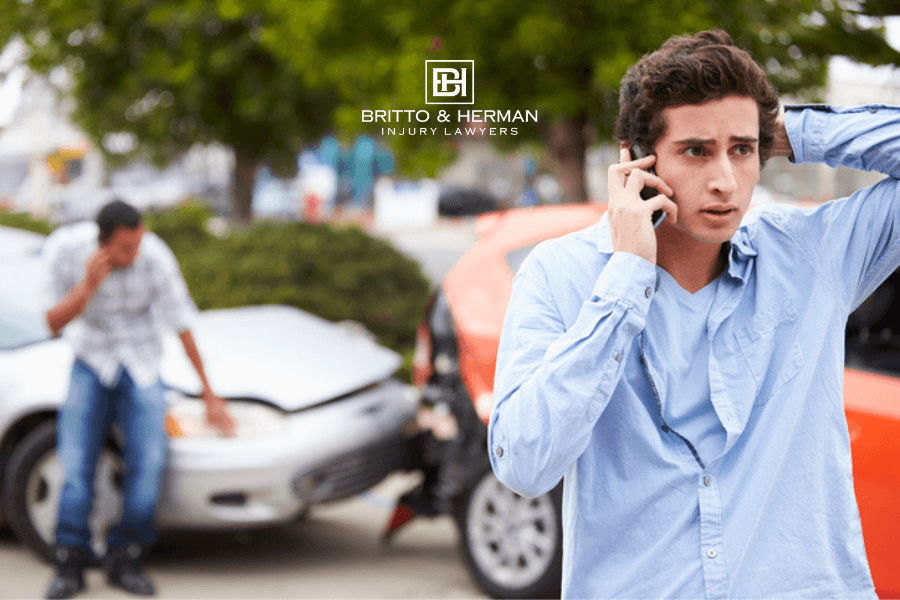
    Picture this: you’re hosting a family gathering when you realize you’ve run out of beverages. Your friend offers to make a quick run to the store to restock. However, his car is blocked in, so you lend him your vehicle keys without a second thought. Shortly after, you receive an unsettling phone call from him informing you that he’s been involved in an accident while driving your car — and it was his fault.

    After the initial shock, as the vehicle owner you’re left wondering, “Am I liable if someone borrowed my car and got in an accident in Florida?” In this blog, we’ll delve into the potential repercussions you might face and how you can handle this challenging situation.

    Florida’s Dangerous Instrumentality Doctrine

    The first thing you need to know is that Florida follows the Dangerous Instrumentality Doctrine, which states that the owner of a vehicle is liable for any damages or injuries caused by the operator of the vehicle, as long as the owner has given their consent. This means that if you lend your car to someone and they cause an accident, you could be held responsible for the resulting damages and injuries, even if you weren’t present at the time of the incident.

    Insurance Coverage

    When you lend your car and an accident occurs, it’s important to understand how your auto insurance policy will respond. Here’s what typically happens:

    Primary Coverage

    Your insurance policy usually serves as the primary coverage when someone else is driving your car with your consent – because insurance applies to the vehicle, not the driver. This means that in the event of an accident, your insurance company will handle the claims up to the limits of your policy. It covers damages or injuries caused to others and may cover your vehicle depending on your type of coverage.

    Types of Coverage

    • Liability Insurance: This is mandatory in Florida and covers injuries or damages your vehicle causes to others.
    • Collision Insurance: Pays for damage to your vehicle from the collision, regardless of who is at fault. You will need to pay the deductible, which you may want to discuss with the person who borrowed your car.
    • Comprehensive Insurance: Covers damages from non-collision related incidents such as theft or natural disasters.
    • Personal Injury Protection (PIP): Mandatory in Florida due to its no-fault system, covering medical expenses for injuries to the driver and passengers.

    Exceeding Policy Limits

    If the damages from an accident exceed your policy limits, you could be personally liable for the excess amount. However, if the borrower of your car has their own insurance, their policy might cover the additional costs. It’s crucial to understand the interplay between different insurances to protect yourself financially.

    Uninsured/Underinsured Motorist Coverage

    This coverage is crucial if the accident involves a driver who does not have adequate insurance. It helps cover your expenses that the other party’s insurance cannot.

    Always review and understand your insurance policy before lending your vehicle. If in doubt, contact your insurance provider to clarify how your coverage works when someone else is driving your car. Being well-informed can help you make better decisions about whether to allow someone else to borrow your car.

    Dealing with the Aftermath

    After addressing the insurance implications, it’s crucial to know what steps to take if your car has been involved in an accident while it was borrowed. Here’s how to handle the situation effectively:

    • Instruct the borrower to gather essential information, including requesting a police report, collecting witness statements, and taking photos of the damage.
    • Report the accident to your insurance company and provide them with the information collected by the borrower. Your insurer may assign a claims adjuster to evaluate the accident details and determine the appropriate payout.
    • Maintain communication with the borrower, ensuring they cooperate with your insurance company’s investigation and claims process. Relay any updates or requirements between the borrower and your insurer.
    • Discuss financial considerations, such as out-of-pocket expenses and reimbursement agreements with the borrower to avoid misunderstandings and preserve personal relationships.
    • Monitor the progress of the insurance claim and maintain open lines of communication with all parties involved to help reduce the stress and financial impact of the accident.

    By efficiently managing these steps, you can navigate the aftermath of an accident involving your borrowed car with greater ease and clarity.

    When to Seek Legal Help

    If someone borrowed your car and got in an accident in Florida, you might be wondering whether you need to hire a car crash attorney. While not every situation requires legal representation, there are several scenarios where seeking the advice and guidance of a car crash attorney can be crucial:

    1. Serious Injuries or Property Damage: If the accident caused significant injuries or extensive property damage, you may face a lawsuit from the injured parties or their insurance companies. In this case, having an experienced attorney on your side can help protect your rights and minimize your legal and financial liability.
    2. Disputed Liability: If there are questions or disagreements about who is at fault for the accident, or if the borrower is claiming that you bear some responsibility, an attorney can help investigate the circumstances and build a case to defend you.
    3. Complex Insurance Issues: When someone borrows your car and causes an accident, navigating the insurance claims process can be complicated. If you’re unsure about your coverage, or if there are disputes with the insurance companies involved, an attorney can provide valuable guidance and advocacy.
    4. Uninsured or Underinsured Borrower: If the person who borrowed your car doesn’t have insurance, or if their coverage is insufficient to pay for the damages they caused, you may need to rely on your own insurance. An attorney can help you understand your options and pursue all available sources of compensation.
    5. Legal Questions or Concerns: If you have any legal questions or concerns related to the accident, such as how Florida’s dangerous instrumentality doctrine might apply to your case, or what steps you need to take to protect yourself, consulting with an attorney can provide the answers and peace of mind you need.

    Remember, even if you’re unsure whether you need legal representation, it’s always a good idea to consult with a car crash attorney after an accident. Many attorneys offer free initial consultations, so you can discuss your case and get a professional opinion on your best course of action without any upfront costs. Ultimately, having an experienced legal advocate on your side can help ensure that your rights are protected and that you achieve the best possible outcome in your case.

    Get the Legal Help You Need When Someone Borrowed Your Car and Caused an Accident

    If someone borrowed your car and got in an accident in Florida, you might be feeling stressed and confused about your legal rights and responsibilities. Don’t waste valuable time searching online for a “car wreck attorney near me.” The knowledgeable team at Britto & Herman Injury Lawyers is here to guide you through this challenging situation and help protect your interests.

    As a vehicle owner, you may face legal and financial consequences, even if you weren’t behind the wheel at the time of the accident. Our skilled attorneys, led by Board Certified Trial Lawyer Daniel Britto, Esq. and his partner Michael S. Herman, Jr., Esq. have over 25 years of combined experience handling complex car accident cases. We can help you understand Florida’s unique laws, communicate with insurance companies, and fight for the best possible outcome in your case.

    Don’t face the aftermath of a borrowed car accident alone. Contact Britto & Herman Injury Lawyers today at (561) 835-5555 or complete our online form for a free, no-obligation case review with a Jupiter personal injury attorney. We offer 24/7 availability, virtual consultations, and a streamlined, paperless process to ensure your legal journey is as smooth as possible.

    Copyright © 2024. Britto & Herman Injury Lawyers. All rights reserved.

    The information in this blog post (“post”) is provided for general informational purposes only and may not reflect the current law in your jurisdiction. No information in this post should be construed as legal advice from the individual author or the law firm, nor is it intended to be a substitute for legal counsel on any subject matter. No reader of this post should act or refrain from acting based on any information included in or accessible through this post without seeking the appropriate legal or other professional advice on the particular facts and circumstances at issue from a lawyer licensed in the recipient’s state, country, or other appropriate licensing jurisdiction.

    Britto & Herman Injury Lawyers
    1001 W Indiantown Rd., Suite 101
    Jupiter, FL 33458
    (561) 835-5555
    https://staging.brittoherman.com/
  • Are You Suffering Head Trauma From a Car Accident? Know the Signs of TBIs

    Are You Suffering Head Trauma From a Car Accident? Know the Signs of TBIs

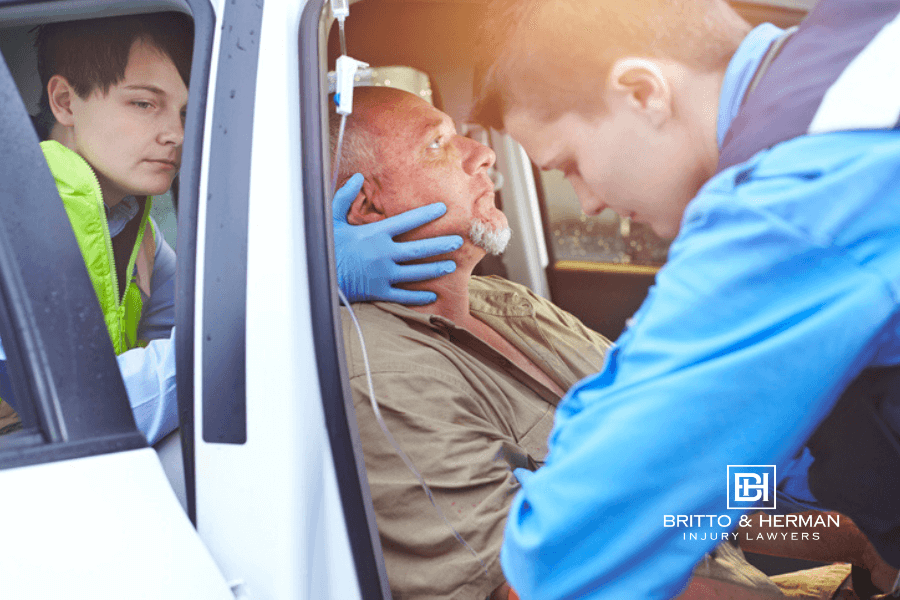
    Ever been in a car accident and brushed it off with a “thank goodness it wasn’t worse”?  While that’s a natural reaction, a hidden danger might be lurking – head trauma from a car accident.  Did you know that car accidents are one of the leading causes of TBIs (traumatic brain injury) in adults? Even a seemingly minor bump to the head can result in a TBI, leaving lasting consequences. In this blog, an experienced Jupiter personal injury lawyer from Britto & Herman Injury Lawyers explains how to recognize the signs of TBI and why seeking medical attention is crucial.

    What is a Traumatic Brain Injury (TBI)?

    A TBI is any injury that disrupts the normal function of your brain. This can happen from a blow to the head, or even from something penetrating the skull. TBIs can range from mild (concussions) to moderate and severe, depending on the severity of the impact and the area of the brain affected.

    How Does a TBI Occur?

    The severity of a TBI can vary depending on the force of the impact.

    • Mild TBI: May temporarily affect brain cells, often causing short-term symptoms
    • Moderate-Severe TBI: Can result in bruising, torn tissues, bleeding, and other physical damage to the brain, potentially leading to long-term complications or even death

    Symptoms of TBI

    A TBI’s effects can be wide-ranging, impacting both physical and psychological aspects. Symptoms can appear immediately after the accident or take days or weeks to develop.

    Symptoms of a Mild TBI

    • Physical: Headache, nausea or vomiting, fatigue, speech difficulties, dizziness or balance problems.
    • Sensory: Blurred vision, ringing in the ears, unusual taste sensations, changes in smell, sensitivity to light or sound.
    • Cognitive, Behavioral, or Mental: Brief loss of consciousness (seconds to minutes), confusion or disorientation (without losing consciousness), memory or concentration problems, mood swings or feeling depressed or anxious, difficulty sleeping (either too much or too little).

    Symptoms of a Moderate to Severe TBI

    These symptoms may appear within hours or days of the accident, in addition to those listed for mild TBI:

    • Physical: Loss of consciousness (minutes to hours), worsening or persistent headache, repeated vomiting or nausea, seizures, dilated pupils, clear fluids draining from the nose or ears, inability to awaken from sleep, weakness or numbness in limbs, loss of coordination.
    • Cognitive or Mental: Extreme confusion, agitation, combativeness, or unusual behavior, slurred speech.
    • Coma and Other Disorders of Consciousness

    Spotting Signs in Children

    Infants and young children may not be able to communicate symptoms like headaches or confusion. Here’s what to watch for:

    • Changes in eating or nursing habits
    • Unusual irritability or persistent crying
    • Difficulty focusing or paying attention
    • Changes in sleep patterns
    • Seizures
    • Low mood or sadness
    • Excessive sleepiness
    • Loss of interest in favorite activities

    Why Seeking Medical Help is Essential

    After a car accident, especially one that involves a blow to the head, seeking medical attention is crucial, even if you don’t experience any immediate symptoms. Here’s why:

    • Hidden Injuries: TBIs can be tricky. Sometimes, especially with mild TBIs, symptoms may not appear for days or even weeks. A medical professional can perform a thorough evaluation to identify any underlying injuries and ensure you receive proper treatment.
    • Accurate Diagnosis: Early and accurate diagnosis is key to a good recovery from a TBI. A doctor can assess the severity of your injury and develop a personalized treatment plan. This might involve medication, physical therapy, cognitive rehabilitation, or other interventions.
    • Preventing Complications: Left untreated, even a mild TBI can lead to serious complications down the road. These can include headaches, dizziness, memory problems, sleep issues, and even depression. Prompt medical attention can help prevent these complications and improve your long-term health.
    • Documentation: Seeking medical care after a car accident creates a documented record of your injury. This documentation can be crucial if you need to file an insurance claim or pursue legal action in the future.

    Remember, when it comes to head injuries, it’s always better to err on the side of caution. A quick medical checkup could give you peace of mind and ensure you receive the care you need for a full recovery.

    Legal Help After a TBI

    A TBI can have a devastating financial impact. Medical bills, lost wages, and ongoing care –  physical therapy, cognitive rehabilitation, and potential medications – can quickly drain your resources. If your car accident  was caused by another driver’s negligence, such as speeding, reckless driving, or driving under the influence, you might be entitled to compensation for these expenses.

    Here’s how a car accidents lawyer experienced in personal injury claims can be a valuable asset during your recovery:

    Understanding Your Legal Rights

    In the aftermath of a TBI, legal matters can feel overwhelming.  An attorney can explain your legal options in clear terms and guide you through the personal injury claim process.

    Gathering Evidence

    Building a strong case requires evidence to prove the other driver’s negligence caused your accident and TBI.  Your lawyer will gather police reports, witness statements, medical records, and other relevant documentation.

    Negotiating with Insurance Companies

    Dealing with insurance companies after a TBI can be stressful.  An attorney with experience negotiating personal injury claims can advocate for maximum compensation, ensuring you’re not shortchanged.

    Managing Medical Bills

    Your lawyer can work with medical providers to ensure your bills are fair and accurate.  They can also help navigate the complexities of medical liens and ensure your future medical needs are considered in the settlement.

    Peace of Mind During Recovery

    Focusing on your physical and cognitive rehabilitation is crucial after a TBI.  An attorney can handle the legal legwork, allowing you to concentrate on healing.

    Remember, this consultation with a personal injury lawyer should occur after you’ve received medical attention and begun your recovery process.  The initial focus should always be on your health and well-being. However, a lawyer can be a powerful ally in securing compensation for your injuries so you can move forward after a life-altering event like a TBI.

    Injured in a Car Accident with Head Trauma? Get Help Now

    Have you or a loved one suffered head trauma from a car accident due to someone else’s negligence?  Don’t wait to get the information and support you need.  If you’ve been searching online for “car accident lawyers near me,” schedule a free consultation with Britto & Herman Injury Lawyers instead. The team, led by Board Certified Trial Lawyer Daniel Britto, and Michael S. Herman, Jr., Esq., Founding Partners and Shareholders, has over 25 years of combined experience navigating complex personal injury claims. Our firm has earned multiple verdicts in favor of injured clients.  Let us do the same for you.

    For your convenience, we are available 24/7, offer free virtual case evaluations, and streamlined, paperless sign-ups. Our aim is to simplify your legal journey and ensure you receive the maximum compensation for your injuries.

    Contact Britto & Herman Injury Lawyers at (561) 835-5555 or fill out our online form for a free case review with a Jupiter personal injury attorney.

    Copyright © 2024. Britto & Herman Injury Lawyers. All rights reserved.

    The information in this blog post (“post”) is provided for general informational purposes only and may not reflect the current law in your jurisdiction. No information in this post should be construed as legal advice from the individual author or the law firm, nor is it intended to be a substitute for legal counsel on any subject matter. No reader of this post should act or refrain from acting based on any information included in or accessible through this post without seeking the appropriate legal or other professional advice on the particular facts and circumstances at issue from a lawyer licensed in the recipient’s state, country, or other appropriate licensing jurisdiction.

    Britto & Herman Injury Lawyers
    1001 W Indiantown Rd., Suite 101
    Jupiter, FL 33458
    (561) 835-5555
    https://staging.brittoherman.com/
  • Filing a Wrongful Death Lawsuit in Florida: How to Know if You Have a Valid Claim

    Filing a Wrongful Death Lawsuit in Florida: How to Know if You Have a Valid Claim

    Losing a loved one is an indescribably painful experience, especially when their death results from someone else’s negligence or wrongdoing. In Florida, the law provides a path for survivors to seek justice and compensation through a wrongful death lawsuit. How do you know if you have a valid claim? This blog will answer that question and explain what else you need to know so you can take the first steps toward healing and restitution.

    Have you lost a loved one due to someone else’s negligence?  Britto & Herman Injury Lawyers are here to help and advocate on your behalf. Contact us at (561) 835-5555 for a complementary case evaluation with a wrongful death attorney from our team.

    What is Wrongful Death in Florida?

    In Florida, wrongful death is defined as a death caused by the negligent, careless, or intentional actions of another person or entity. This legal concept is designed to hold the responsible party accountable for their actions and provide financial support to the deceased person’s (decedent) family, recognizing the profound impact a sudden loss can have on a family, both emotionally and financially.

    The Florida Wrongful Death Act

    The Florida Wrongful Death Act (Florida Statutes Sections 768.16-768.26) is the foundation for supporting families who have lost a loved one due to another’s negligence. It emphasizes shifting the financial and emotional burdens from the survivors to the at-fault party, ensuring that families receive the necessary support during their time of loss.

    Key Elements of a Valid Wrongful Death Lawsuit

    To establish a valid wrongful death case in Florida, you must prove:

    • Duty of Care: This means that the defendant (alleged negligent party) had a legal obligation to act in a certain way toward the decedent. For example, drivers have a duty to follow traffic laws and operate their vehicles safely to avoid harming others.
    • Breach of Duty: The defendant failed to fulfill their duty of care. Using the driving example, running a red light would be a breach of the duty to drive safely.
    • Causation: There must be a direct link between the defendant’s breach of duty and the death of the decedent. In other words, the wrongful act or negligence directly caused the death that occurred.
    • Damages: The death must result in quantifiable damages. This includes not only economic damages like funeral expenses and lost income but also non-economic damages such as the emotional suffering of the survivors.

    In a wrongful death lawsuit in Florida, proving these four elements is critical to establishing the defendant’s liability and securing compensation for the survivors. This legal standard ensures that wrongful death claims are substantiated by clear evidence of negligence or wrongful action leading to someone’s death, aligning with the principles of justice and accountability. This is why consulting with lawyers for wrongful death is crucial.

    Who Can File a Wrongful Death Lawsuit?

    Only the personal representative of the decedent’s estate can file a wrongful death lawsuit, for the benefit of the decedent’s immediate family members and the estate. This ensures the lawsuit is managed properly and any compensation awarded is appropriately distributed.

    Compensation for the Loss

    Damages in a wrongful death lawsuit can be broadly categorized into economic (tangible losses like funeral expenses, medical expenses, lost income and lost net accumulations) and non-economic damages (intangible losses such as pain and suffering, loss of support and services of a loved-one and loss of companionship). In some cases, punitive damages may also be awarded to punish the defendant for particularly egregious behavior and deter similar conduct in the future. Florida law allows both the decedent’s estate and the statutory survivors to recover damages in a wrongful death lawsuit. Whether a family member qualifies for damages as a statutory survivor depends on their relationship to the decedent as well as whether the decedent was married or unmarried at the time of death. An experienced personal injury lawyer can help you determine if you qualify for damages as a survivor after a family member’s wrongful death.

    Statute of Limitations

    In Florida, wrongful death claims must be filed within two years from the date of death. There are very few exceptions to this rule, making it crucial to consult an attorney as soon as possible to ensure your claim is filed on time.

    The Process of Filing a Wrongful Death Lawsuit in Florida

    The process begins with consulting an experienced wrongful death attorney, who can advise you on the viability of your claim and the best course of action. After choosing to proceed, your attorney will conduct a thorough investigation, gather evidence, and file a lawsuit on your behalf. While many wrongful death claims are settled out of court, some may go to trial, where a judge or jury will make the final decision.

    Common Challenges in Wrongful Death Lawsuits

    Proving negligence or fault stands as the cornerstone challenge in any wrongful death lawsuit. This task demands a robust compilation of evidence, including eyewitness testimonies, expert opinions, and forensic analysis, to establish a direct link between the defendant’s actions and the tragic loss of life.

    The complexity of demonstrating this causality cannot be understated, as it requires not only showing that the defendant had a duty of care but also that their breach of this duty directly led to the decedent’s death. This often involves intricate legal and medical arguments, particularly in cases where multiple factors could have contributed to the outcome.

    In addition, navigating the interactions with insurance companies can significantly intensify the ordeal for the grieving family. Insurance firms are equipped with seasoned legal teams dedicated to reducing the company’s financial exposure. They might challenge the severity of the claim, dispute the evidence presented, or argue that the decedent had a role in their own death, thereby attempting to diminish their liability.

    Determining who can be a survivor under Florida’s wrongful death statute is complicated. Florida law separates claims of the estate (lost wages, lost net accumulations, medical bills) from the claims of qualifying survivors in wrongful death actions. Who may qualify as a survivor depends on whether the decedent was married or unmarried and the age of any children. Florida law also callously excludes many family members from the “survivor” category, meaning they cannot recover for the loss of their loved one at all. You need an experienced attorney to evaluate the specific circumstances of your wrongful death claim to determine whether you qualify as a survivor who can recover damages for the loss of a loved one.

    Wrongful death settlements may require court approval. Courts will approve the split of the settlement amongst the estate and different survivors.

    While no amount of compensation can replace your loved one, pursuing a wrongful death claim can offer a sense of justice and financial security during this challenging time.

    Have You Lost a Loved One Due to Someone Else’s Negligence?

    If you’re coping with the loss of a loved one and believe their death was caused by someone else’s negligence, we encourage you to reach out for legal support. Consulting an experienced wrongful death attorney can provide you with clarity, peace of mind, and the best chance for a favorable outcome in your case.

    With over 25 years of combined experience, our team, led by Attorney Daniel Britto, a Board Certified Trial Lawyer, and Michael S. Herman, Jr., Esq., an aggressive, client-minded advocate, is uniquely qualified to unravel the complexities of wrongful death cases to protect your rights and interests.

    We recognize the challenges in determining negligence, dealing with insurance companies, and claiming rightful compensation after losing a loved one due to another’s negligence. Our approach is tailored to your needs, offering 24/7 availability, free virtual case evaluations, and streamlined, paperless sign-ups. We’re here to simplify your legal journey and help you receive justice and compensation.

    If you’ve been searching online for “wrongful death lawyers near me,” contact Britto & Herman Injury Lawyers, The Voice for Florida Injury Victims, instead at (561) 835-5555 or fill out our online form for a free case review. Let us advocate for you if you’ve lost a loved one due to another’s negligence. We serve all Florida counties.

    Copyright © 2024. Britto & Herman Injury Lawyers. All rights reserved.

    The information in this blog post (“post”) is provided for general informational purposes only and may not reflect the current law in your jurisdiction. No information in this post should be construed as legal advice from the individual author or the law firm, nor is it intended to be a substitute for legal counsel on any subject matter. No reader of this post should act or refrain from acting based on any information included in or accessible through this post without seeking the appropriate legal or other professional advice on the particular facts and circumstances at issue from a lawyer licensed in the recipient’s state, country, or other appropriate licensing jurisdiction.

    Britto & Herman Injury Lawyers
    1001 W Indiantown Rd., Suite 101
    Jupiter, FL 33458
    (561) 835-5555
    https://staging.brittoherman.com/
  • Who Is Liable in a Truck Accident in Florida?

    Who Is Liable in a Truck Accident in Florida?

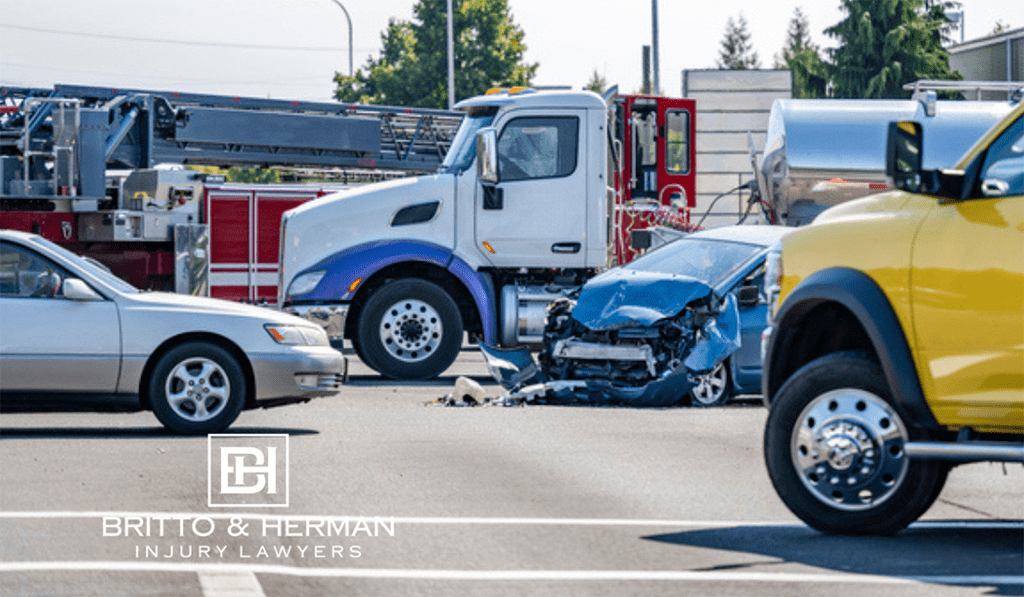
    Florida’s highways have recently witnessed a series of alarming truck accidents, each underscoring the grave risks these large vehicles pose on the road. Headlines like “Turnpike reopens in Osceola County after crash involving 3 semis, SUV & pickup truck,” “One killed, one seriously injured in tractor-trailer crash,” and “Florida’s Turnpike halts as major crash prompts mass casualty incident” are stark reminders of the potential for devastation.

    Truck accidents are not just another statistic; they are often catastrophic events leading to severe injuries, loss of life, and extensive emotional and financial turmoil for those involved. The journey to recovery for victims can be fraught with challenges, including overwhelming medical expenses, lost income, and profound emotional distress.

    If you or a loved one has been affected by a truck accident in Florida, it’s crucial to understand the legal landscape. You may have questions such as, Who is liable in a truck accident? Why are truck accident claims more complex? How will an attorney determine liability? Though not exhaustive, this blog post aims to shed light on these questions, offering insights into the complex world of truck accident liability in Florida.

    For those in need of immediate assistance, our team is here to help. Contact us at (561) 835-5555 for a FREE case evaluation with a truck accidents lawyer from our team.

    Complexities of Truck Accident Claims

    Before discussing liability, let’s take a look at why truck accident claims are generally more complex than car accident claims and key steps to take following such an accident.

    • Increased Number of Stakeholders: Truck accidents often involve more parties than car accidents, including the truck driver, trucking company, cargo owner, and truck or part manufacturers. This variety complicates liability determination and settlement negotiations.
    • Greater Injury Severity: Due to their size and weight, trucks are more likely to cause serious injuries or fatalities in accidents. This results in higher medical costs and lost income for victims.
    • Stringent Regulations: The trucking industry is under the close regulation of the Federal Motor Carrier Safety Administration (FMCSA). Compliance with numerous laws and regulations is mandatory, and violations can lead to liability in accidents.
    • Complex Investigation Process: Investigating truck accidents is more challenging than car accidents due to vehicle complexity and potential multiple liable parties. Trucking companies often have experienced legal teams for defense in these cases.
    • Extended Resolution Time: The complexities mentioned above often mean that truck accident claims take longer to resolve and are more challenging to win. Therefore, for those involved in a truck accident, seeking advice from a knowledgeable truck accident attorney, especially in the Fort Lauderdale area, is essential.

    Key Steps to Take Following a Truck Accident in Florida

    When you’re involved in a truck accident in Florida, it’s crucial to take certain steps immediately to protect your legal rights and interests:

    • Ensure Safety First: If there are injuries, dial 911 immediately. If it’s safe to do so, move your vehicle to a safer area.
    • Record the Incident: Exchange insurance and contact information with everyone involved. Take photos of the damage to the vehicles, any injuries, and the accident scene. Also, collect contact information from any witnesses.
    • File a Police Report: It’s important to report the accident to the police for an official record. This is crucial even for minor accidents, as they might have legal consequences later.
    • Notify Your Insurance: Promptly have your lawyer contact your car insurance provider to report the accident and start the claim process.

    Important Legal Point to Remember

    • In Florida, any accident that involves a commercial truck must be reported to the authorities, regardless of whether there are injuries.

    Determining Liability in Trucking Accidents

    Unlike typical car accidents, where fault may be relatively straightforward, truck accidents often involve multiple parties, making determining liability more complex. These parties can include:

    • The Truck Driver: If the accident was caused by the driver’s negligence, such as speeding, driving under the influence, or violating traffic laws, the driver can be held liable. Sometimes the truck driver has his own company that is involved in truck ownership, while he is paid by a larger trucking company for her services.
    • The Trucking Company: Companies can be held responsible if they owned the truck, if the driver was in the course and scope of his employment when the accident happened, or if the accident was due to factors like inadequate driver selection, training, or retention; improper vehicle maintenance; overloading cargo on semi trucks; or pushing drivers to meet unrealistic schedules that lead to fatigued driving. This list is not exhaustive, and there may be many companies involved in the ownership of the truck or the employment of the driver in some way.
    • The Cargo Loaders: Incorrectly loaded or overloaded cargo can contribute to accidents. If this is the case, the parties responsible for loading the truck may be held liable.
    • The Truck or Parts Manufacturer: If a defective truck part caused the accident, the manufacturer of the truck or the specific part could be responsible.
    • Maintenance Providers: If improper or negligent maintenance led to the accident, the service providers who maintained the truck could be at fault.

    How Your Jupiter Personal Injury Lawyer Will Determine Liability

    Determining liability in a truck accident is a critical step towards ensuring justice and compensation for victims. Your Jupiter personal injury lawyer plays a pivotal role in this process, employing a systematic approach to unravel who is legally responsible for the accident. Here’s how they do it:

    In-Depth Investigation

    Your attorney will start with a comprehensive investigation of the accident. This involves gathering all relevant evidence such as accident scene photos, witness statements, police reports, and any available video footage.

    Analyzing Trucking Regulations and Logs

    They will scrutinize the truck driver’s logs and the trucking company’s records. This is to check for any violations of federal and state trucking regulations, such as hours of service violations, which could point towards negligence.

    Vehicle Inspection

    The attorney may arrange for an expert inspection of the truck to identify any mechanical issues or maintenance failures. This helps in determining if vehicle defects contributed to the accident. New technology can be used to map the scene, when available, and 3D map the vehicles so that the accident and impacts can be recreated later.

    Consulting Experts

    Attorneys often consult with accident reconstruction experts who can help piece together how the accident happened and identify contributing factors, providing a clearer picture of liability.

    Examining Cargo Records

    If improperly secured or overloaded cargo is suspected, your attorney will examine cargo loading records and practices to see if they played a role in the accident.

    Modified Comparative Negligence

    In Florida, the modified comparative negligence rule plays a crucial role in truck accident claims. Under this rule, each party involved is assigned a percentage of fault for the accident. This percentage directly impacts the compensation the injured party can receive. For instance, if an injured party is found 20% at fault, their compensation is reduced by 20%. Importantly, if the injured party’s fault is 50% or more, they are not eligible for compensation from other parties.

    As you can see, your attorney’s task includes meticulously assessing and presenting evidence to ensure a fair and accurate distribution of fault, maximizing your potential compensation while navigating the intricacies of this comparative negligence system.

    Injured in a Florida Truck Accident? Get 24/7 Support & Justice with Britto & Herman Injury Lawyers

    Understanding liability in a truck accident in Florida can be complex and overwhelming. If you find yourself navigating this challenging terrain, Britto & Herman Injury Lawyers are here to offer guidance and support. With over 25 years of combined experience, our team, led by Attorney Daniel Britto, a Board Certified Trial Lawyer, are uniquely qualified to unravel the complexities of truck accident cases to protect your rights and interests.

    Attorney Britto’s Board Certification exemplifies his profound commitment and experience in handling such complex legal matters. When you consult with Britto & Herman, you’re not just acquiring legal services; you’re partnering with a team renowned for their proficiency and successful track record in managing the demanding aspects of truck accident litigation.

    We recognize the stress and confusion that comes with determining liability, dealing with insurance companies, and claiming rightful compensation after a truck accident. Our approach is tailored to your needs, offering 24/7 availability, free virtual case evaluations, and streamlined, paperless sign-ups. Our aim is to simplify your legal journey and ensure you receive the justice and compensation you are entitled to.

    Contact Britto & Herman Injury Lawyers at (561) 835-5555 or fill out our online form for a free case review with a Jupiter personal injury attorney. Let us help you find clarity and resolution in the aftermath of your truck accident.

    Copyright © 2024. Britto & Herman Injury Lawyers. All rights reserved.

    The information in this blog post (“post”) is provided for general informational purposes only and may not reflect the current law in your jurisdiction. No information in this post should be construed as legal advice from the individual author or the law firm, nor is it intended to be a substitute for legal counsel on any subject matter. No reader of this post should act or refrain from acting based on any information included in or accessible through this post without seeking the appropriate legal or other professional advice on the particular facts and circumstances at issue from a lawyer licensed in the recipient’s state, country, or other appropriate licensing jurisdiction.

    Britto & Herman Injury Lawyers
    1001 W Indiantown Rd., Suite 101
    Jupiter, FL 33458
    (561) 835-5555
    https://staging.brittoherman.com/
  • Who Pays for a Rental Car After an Accident in Florida?

    Who Pays for a Rental Car After an Accident in Florida?

    Following up on our previous blog on “5 Things You Should Do and Not Do After a Jupiter Car Accident” we now tackle another crucial question often faced by individuals involved in car accidents in Florida: “Who pays for a rental car after an accident?” The answer, however, is not always straightforward.

    Take the case of David, a resident of Jupiter, who found himself in a complex situation after his car was totaled in an accident. Despite having insurance, David encountered difficulties with both his own insurer and the at-fault driver’s insurance company. Left without a car to commute to work, he had to pay for a rental out of pocket before he sought legal assistance.

    In this blog, we delve into the nuances of rental car coverage post-accident in Florida. Whether you’re lacking collision coverage, facing a denial from the at-fault driver’s insurer, or simply unsure of your next steps, we aim to provide clarity.

    Plus, for those in need of immediate assistance, our team is here to help. Contact us at (561) 835-5555 for a FREE case evaluation. Keep reading to learn who bears the financial responsibility for a rental car after a Jupiter car accident beginning with your own insurance company.

    Your Own Insurance Company

    In Florida, you generally have to purchase separate rental coverage on your car insurance policy in order to be covered for a rental vehicle after a car accident. Simply having collision and comprehensive coverage will not cover your rental car under most Florida auto policies. Your rental car coverage likely only covers a like-in-kind vehicle, or may only cover up to a certain amount for a certain number of maximum days. We often see policies that include rental coverage with limits like “up to $30 per day” and “for a maximum of thirty days”. Some policies will pay for the rental car directly, while others are rental car reimbursement policies. The amount of coverage will depend on your policy, so it’s important to review the specifics about your coverage before getting a rental car. Oftentimes, your insurance company can set up the rental car for you once they verify coverage.

    The Other Driver’s Insurance Company

    What Does the Law Say? Florida law allows recovery of property damages from a negligent driver and includes rental car costs in the definition of damages. Florida Supreme Court Standard Civil Jury Instruction 501.2(h) specifically provides for recovery of property damage, including loss of use of property such as a motor vehicle. Florida Supreme Court Standard Civil Jury Instruction 501.2(h) states:

    “h.     Property damage:

    Any damage to [his] [her] [its] (identify automobile or other personal property). The measure of such damage is:

    [the difference between the value of the (name property) immediately before (incident complained of) and its value immediately afterward.]

    [the reasonable cost of repair, if it was practicable to repair the (name property), with due allowance for any difference between its value immediately before the (incident complained of) and its value after repair.]

    You shall also take into consideration any loss to (claimant) [for towing or storage charges and] by being deprived of the use of [his] [her] [its] (name property) during the period reasonably required for its [replacement] [repair].

    If the other driver was at fault for the accident and they have property damage coverage, their insurance company may cover the cost of your rental car. In Florida, this is called “loss of use” damage and is a type of property damage claim. Remember that you are entitled to a like-in-kind vehicle, meaning the same car that was damaged. If you had a luxury SUV, the insurance company cannot offer you a two door hatchback. They owe you the same car you lost. If you do not bother to get a rental car, you are likely still entitled to monetary damages for loss of use. For example, if your luxury SUV cost $400.00 a day to rent on average, then you should be entitled to $400 per day in damages for each day you did not have use of your vehicle (because it was being repaired or you were trying to replace it) regardless of whether you rented a car.

    If your vehicle was damaged and is being repaired, you should be entitled to a rental car for the reasonable period of repair. If your vehicle was a total loss, you should be entitled to a rental car for the reasonable period of time it takes to replace your vehicle. However, insurance companies often delay or deny rental car claims, or try to offer you a vehicle that is lesser than the vehicle that was involved in the accident. Be sure to keep copies of all your rental receipts and communication with insurance adjusters.

    There may also be issues with limited coverage, meaning there is not enough money on the at fault driver’s policy to cover your rental car. Florida only mandates $10,000.00 in property damage coverage at minimum by law. If a driver with the minimum of $10,000.00 causes an accident with property damage over $10,000.00, such as a total loss accident or an accident involving multiple vehicles, there may not be enough money left over for a rental car after repairs or replacement to damaged vehicles.

    Self Pay with a Rental Car Company

    If you don’t have rental car coverage on your insurance policy and the other driver’s insurance company denies your claim for a rental car, you can still rent a car from a rental car company out of pocket. Be sure to keep all the paperwork and receipts in case you need to seek reimbursement later.

    Beware of Potential Out of Pocket Costs

    Even if you have rental car coverage or if the other driver’s insurance company agrees to pay for your rental car, beware of potential out of pocket costs. Rental car companies will try to sell you extras like insurance, collision damage waivers, and other items with your rental car. Understand that in most cases these extras are not covered. While it may be prudent to purchase these additional coverages in certain circumstances, insurance companies generally only cover the cost of the rental car itself. Likewise, gasoline is the renter’s responsibility. Be aware of out of pocket expenses you may incur even where you do not have to pay for the rental car itself.

    What Does the Law Say?

    Florida Supreme Court Standard Civil Jury Instruction 501.2(h) allows a plaintiff to recover the difference between the value of property immediately before an automobile accident and its value after repair, i.e. “diminished value,” when caused by the negligence of another. Florida Supreme Court Standard Civil Jury Instruction 501.2(h) states:

    “h. Property Damage. Any damage to [his] [her] [its] (identify automobile or other personal property). The measure of such damage is: 

    [the reasonable cost of repair, if it was practicable to repair the (name property), with due allowance for any difference between its value immediately before the (incident complained of) and its value after repair.]”

    Legal Rights and Responsibilities

    Understanding Your Rights

    • After an accident in Florida, if you’re not at fault, options for securing a rental car depend on your own insurance coverage, the at-fault driver’s insurance coverage, and your willingness to pay out-of-pocket and seek reimbursement later.
    • If covered by insurance, you are entitled to reimbursement for your rental car expenses, up to the specific coverage limits set by your policy or the at-fault driver’s policy.

    Understanding Your Responsibilities

    • Report the Accident: Contact the police immediately for any accident with injuries or substantial property damage. Regardless of severity, inform your insurance company within the timeframe specified in your policy.
    • File Claims Timely: Don’t delay! Submit any claims for damages, including rental car expenses, within the deadlines stated in your insurance policy.
    • Mitigating Costs: Make reasonable efforts to keep expenses under control. Choose a rental car comparable to your own vehicle in terms of safety, size, and basic features. Avoid unnecessary upgrades or extended rentals.

    Remember, always consult with a qualified legal professional or your insurance company for specific advice about your individual situation and applicable laws.

    Tips for Dealing with Insurance Companies

    • Understand Your Policy: Before you contact the insurance company, make sure you understand the specifics of your coverage.
    • Documentation is Key: Keep detailed records of all correspondence with insurance companies, including dates, times, and summaries of conversations.
    • Be Persistent but Patient: Insurance processes can be slow. Follow up regularly but allow time for processing.
    • Negotiate: Don’t hesitate to negotiate with the insurance company, especially if you feel the compensation offered is not fair.
    • Seek Legal Advice if Necessary: If you’re facing significant challenges or unfair practices, consulting with an attorney can be invaluable.
    • Use Clear, Concise Communication: When discussing your claim, be clear and concise. Stick to the facts and avoid unnecessary details.

    When to Consider Hiring an Attorney

    Facing Challenges with Insurance Companies

    If you’re experiencing difficulties in dealing with an insurance company after an accident, especially regarding rental car coverage, it might be time to consult a Jupiter car accident lawyer. Common challenges include denied claims, delayed responses, and offers that don’t adequately cover your expenses.

    How an Attorney Can Help

    • Experience in Insurance Law: Attorneys knowledgeable in insurance law can navigate the complex legal landscape, ensuring your rights are protected.
    • Negotiation Skills: Lawyers are skilled negotiators who can communicate effectively with insurance companies to secure a fair settlement.
    • Investigation and Evidence Gathering: An attorney can help gather crucial evidence to support your claim, such as accident reports, witness statements, and expert testimonies.
    • Handling Paperwork and Legal Formalities: Dealing with insurance claims involves a lot of paperwork and legal procedures. An attorney can handle these aspects, allowing you to focus on your recovery.
    • Contesting Denied Claims: If your claim has been unfairly denied, an attorney can challenge the decision and argue your case.
    • Representation in Court: Should your case go to court, having legal representation is vital. An attorney will prepare and present your case, aiming for the best possible outcome.

    When to Contact an Attorney

    • After a Denied Claim: If your claim for a rental car or other damages is denied.
    • If You’re Offered an Unfair Settlement: Before accepting any settlements that seem inadequate.
    • When Facing Delays: If the insurance company is unreasonably delaying your claim.

    While being involved in an accident can be overwhelming, knowing your options for rental car coverage can help ease the stress. Whether you have coverage through your own insurance policy, the other driver’s insurance policy, or a third-party rental car company, you can find a solution that will keep you on the road and able to go about your daily life. If you’re struggling to get coverage for a rental car after an accident, don’t hesitate to seek legal advice to ensure that your rights are protected.

    Struggling with Rental Car Claims After a Florida Car Accident? Let Britto & Herman Injury Lawyers Assist You

    After a car accident in Florida, managing rental car claims can be a hassle, especially when dealing with insurance companies. At Britto & Herman Injury Lawyers, we have over 25 years of combined experience in guiding clients through these challenges. Our team, led by Attorney Daniel Britto, a Board Certified Trial Lawyer, is committed to providing thorough and effective legal support to those affected by car accidents.

    Attorney Britto’s Board Certification is a reflection of his dedication to legal practice and his ability to handle complex car accident cases successfully. When you turn to Britto & Herman, you’re getting more than just legal assistance; you’re gaining a team that’s recognized for their capability and track record in navigating the aftermath of car accidents.

    We understand that dealing with insurance companies after an accident can be challenging, especially when they find reasons to deny your claim. That’s why we offer round-the-clock availability, virtual free case evaluations, and paperless sign-ups for your convenience. Our goal is to make your journey towards resolution as smooth as possible.

    If you’re facing difficulties with your rental car claim, don’t hesitate to contact us. Call (561) 835-5555 or fill out our online form to schedule your free consultation with a Jupiter personal injury attorney. At Britto & Herman Injury Lawyers, we can help you in moving forward after your accident.

    Copyright © 2024. Britto & Herman Injury Lawyers. All rights reserved.

    The information in this blog post (“post”) is provided for general informational purposes only and may not reflect the current law in your jurisdiction. No information in this post should be construed as legal advice from the individual author or the law firm, nor is it intended to be a substitute for legal counsel on any subject matter. No reader of this post should act or refrain from acting based on any information included in or accessible through this post without seeking the appropriate legal or other professional advice on the particular facts and circumstances at issue from a lawyer licensed in the recipient’s state, country, or other appropriate licensing jurisdiction.

    Britto & Herman Injury Lawyers
    1001 W Indiantown Rd Suite 101,
    Jupiter, FL 33458

    (561) 835-5555
    https://staging.brittoherman.com/
  • 5 Things You Should Do and Not Do After a Jupiter Car Accident

    5 Things You Should Do and Not Do After a Jupiter Car Accident

    Palm Beach County, a dynamic coastal community in Florida with over 1.4 million residents, is renowned for its vibrant locales like West Palm Beach, Boca Raton, Delray Beach, and Jupiter. It’s a place where picturesque beaches, lush golf courses, and bustling shopping districts attract both locals and tourists alike. However, with the buzz of all this activity comes a sobering reality: the startling incidents of car accidents.

    Recent data from the Florida Highway Safety and Motor Vehicles Crash Dashboard paints a stark picture – between January 1, 2023, and November 1, 2023, Palm Beach County experienced 21,707 crashes. More than mere statistics, each of these figures represents real individuals and families who have endured the life-altering impact of road accidents.

    Coping with the aftermath of a Jupiter car accident can be overwhelming, as the shock and surge of adrenaline can cloud judgment and make decision-making challenging. It’s crucial to know the appropriate steps to take and pitfalls to avoid in these high-stress situations. In this blog, the team at Britto & Herman Injury Lawyers outlines 5 critical do’s and don’ts to guide you through the immediate actions and decisions following a car accident

    If you or a loved one has been involved in a car accident and are grappling with the consequences, seek legal counsel from an experienced Jupiter car accident lawyer. Contact us at [phone_number dsk_contact=’true’/] for a FREE case evaluation. Our dedicated team is here to guide you through these challenging times and help you secure justice and compensation for your injuries.  We can help you if you’ve been injured.

    Things to Do After a Car Accident

    1. Check for Injuries

    After a car accident, the first and most important thing to do is to check for injuries. Check yourself and your passengers for any signs of injury, such as bleeding, pain, or dizziness. If anyone is injured, call 911 immediately. Even if you feel fine, it’s always a good idea to get checked out by a medical professional as some injuries may not show up right away.

    2. Move Yourself and Your Vehicle to a Safe Place, if Possible

    In the event of an accident, moving your vehicle to a safe place can prevent further incidents and make it easier for emergency responders to access the scene. If the accident is minor and your car is obstructing traffic, cautiously drive it to the roadside. Remember to turn on your hazard lights immediately after the accident to alert other drivers and increase your vehicle’s visibility. In cases of severe accidents, it’s best to leave the vehicle where it is until police or emergency personnel arrive and instruct you otherwise.

    3. Exchange Information with Other Drivers

    Make sure to exchange information with the other driver involved in the accident. This includes name, phone number, insurance information, driver’s license number, and license plate number. Also, write down the make and model of their car, and any witnesses to the accident. Take pictures of the location of the accident, any damages done to the cars, and any injuries sustained.

    4. Contact Your Insurance Company

    After an accident, it’s important to promptly notify your insurance company. However, be mindful of what you say during this initial conversation. Stick to the basic facts of the accident without speculating or admitting fault. Avoid making definitive statements about injuries, as some may become apparent only later.

    Provide them with the accident’s details and the other driver’s information. It’s also wise to ask about your coverage specifics, such as rental car availability and medical benefits. Remember, your insurance company will guide you on how to file a claim and assist with the necessary steps to repair your vehicle

    5. Contact a Car Accident Lawyer

    If the other driver was at fault and you have suffered injuries or damages, it’s essential to get in touch with lawyers dealing with car accidents. A lawyer can help you navigate the legal process, negotiate with insurance companies, and ensure that you receive fair compensation for injuries and losses.

    Things Not to Do After a Car Accident

    1. Don’t Leave the Scene

    If involved in a car accident, it’s imperative to stay at the scene. Leaving constitutes a hit-and-run, a serious offense that may result in fines, license suspension, or jail time. Additionally, if safe to do so, provide assistance to any injured parties, as failing to do so could result in legal liability.

    2. Don’t Admit Fault

    In the aftermath of an accident, avoid admitting fault or making statements that could be interpreted as such. Be cautious with your words to everyone at the scene, including police and witnesses. Stick to exchanging only contact and insurance information with the other driver.

    3. Don’t Neglect Medical Attention

    Even if you think you’re not injured, it is essential to seek medical attention after a car accident. Injuries can manifest themselves over time, and some injuries, like soft tissue or whiplash, may not be immediately apparent. Medical records documenting your injuries can also be used as evidence in court, so be sure to seek medical attention as soon as possible.

    4. Don’t Talk to the Other Driver’s Insurance Company

    Exercise caution and refrain from communicating directly with the other driver’s insurance company. Their goal is often to minimize claim payouts. It’s advisable to let your attorney handle all communications with insurance companies to protect your interests.

    5. Don’t Wait Too Long to Report the Accident

    Florida law requires you to report any car accident that results in injury, death, and damage exceeding $500 to the Florida Department of Highway Safety and Motor Vehicles. You must also report the accident to your insurance company within a reasonable time. Waiting too long to report the accident can damage your ability to file a claim, so call an experienced car accident lawyer immediately to discuss your case.

    How a Jupiter Car Accident Lawyer Can Help

    Knowing the right steps to take or avoid after a car accident is crucial, but understanding the value of professional legal help is equally important. Here’s how a Jupiter car accident lawyer can be a vital ally in such situations.

    • Investigating the Accident: Lawyers thoroughly investigate the accident, gathering evidence such as police reports, witness statements, and traffic camera footage to build a strong case.
    • Handling Insurance Companies: They negotiate with insurance companies on your behalf, ensuring you don’t settle for less than what your claim is worth.
    • Assessing Damages Accurately: An experienced lawyer evaluates both visible and hidden damages, including medical expenses, lost wages, and emotional distress, to ensure comprehensive compensation.
    • Legal Experience and Guidance: They provide skilled legal advice on Florida’s traffic laws and guide you through the legal process, explaining your rights and options.
    • Representation in Court: If necessary, your lawyer will represent you in court, advocating on your behalf and striving for the best possible outcome.
    • Reducing Stress and Burden: A car accident lawyer takes on the legal burden, allowing you to focus on recovery and healing.
    • Contingency Fee Basis: Many car accident lawyers work on a contingency fee basis, meaning you only pay if they win your case.

    With a Jupiter car accident lawyer on your side, you’re not just hiring a legal representative; you’re gaining a partner who is committed to fighting for your rights and helping you recover from the aftermath of an accident.

    We Can Help You Move on with Your Life After a Jupiter Car Accident

    In the wake of a car accident in Jupiter, finding the right legal support is crucial. At Britto & Herman Injury Lawyers, our mission is to help injury victims across all Florida counties get back on their feet. With a combined experience of over 25 years, we have a deep understanding of what it takes to win for our clients who have suffered due to another driver’s negligence.

    We’re more than just experienced attorneys; we bring a level of expertise that sets us apart. Attorney Daniel Britto isn’t just a skilled lawyer; he’s a Board Certified Trial Lawyer, a distinction that speaks to his expertise and commitment to excellence in the courtroom. This means when you choose us, you’re not just getting any legal representation or a gimmicky billboard lawyer –  you’re securing a team with top-tier experience and a proven track record.

    Whether you need to discuss your case or get started with your claim, we make the process seamless and accessible. For your convenience, our personal injury lawyers are available 24/7, and we offer virtual free case evaluations and paperless sign-ups. Call us at [phone_number dsk_contact=’true’/] or complete our online form to schedule your FREE consultation. We can help you if you’ve been injured!

    Copyright © 2023. Britto & Herman Injury Lawyers. All rights reserved.

    The information in this blog post (“post”) is provided for general informational purposes only and may not reflect the current law in your jurisdiction. No information in this post should be construed as legal advice from the individual author or the law firm, nor is it intended to be a substitute for legal counsel on any subject matter. No reader of this post should act or refrain from acting based on any information included in or accessible through this post without seeking the appropriate legal or other professional advice on the particular facts and circumstances at issue from a lawyer licensed in the recipient’s state, country, or other appropriate licensing jurisdiction.

    Britto & Herman Injury Lawyers

    1001 W Indiantown Rd, Suite 101, Jupiter, FL 33458

    [phone_number dsk_contact=’true’/]

    https://staging.brittoherman.com/
  • How To Prove a Slip and Fall Case in Jupiter, Florida

    How To Prove a Slip and Fall Case in Jupiter, Florida

    Elaine, a devoted working mother of three and resident of Jupiter, was running her routine errands, grocery shopping at her favorite store before collecting her kids from school. However, that day was different. As she headed toward the frozen foods aisle, she unexpectedly slipped on a freshly mopped floor. Unfortunately, the store had failed in its responsibility to place a warning sign about the wet floor — a simple act that would have alerted customers like Elaine.

    Due to this negligence, Elaine suffered a broken wrist, sprained ankle, and multiple soft tissue injuries. Had the store adhered to its basic duty of care, she wouldn’t have been thrust into a challenging situation: missed workdays, doctor visits, the strain of physical therapy, the pain of not being able to care for her children, and the disappointment of having to cancel a much-anticipated vacation with her husband.

    Unfortunately, slip and fall accidents are not limited to grocery stores. They can take place in hospitals, parking lots, sidewalks, concert venues, sports arenas, and someone’s home. So, it’s no surprise, given the myriad of places where these accidents can happen, that they account for over 8 million visits to hospital emergency rooms each year.

    In this blog, our seasoned fall lawyer discusses common slip and fall injuries, property owner liability according to Florida law, comparative negligence in Florida, and how to prove a slip and fall case.

    If you’ve been injured in a slip and fall accident, understanding your rights is crucial. Contact Britto & Herman Injury Lawyers at [phone_number dsk_contact=’true’/] to schedule your FREE case evaluation.

    Slip and Fall Injuries

    As mentioned, slip and fall accidents can happen anywhere, from private residences to public spaces like business establishments. Hazardous conditions such as wet floors, uneven surfaces, poorly maintained walkways, or inadequate lighting can cause multiple serious injuries, including:

    • Broken bones
    • Soft tissue injuries
    • Sprains and strains
    • Head trauma
    • Spinal cord injuries
    • Hip fractures
    • Bruising and contusions

    From minor cuts and bruises to permanent disability to long-term disabilities and chronic pain, the injuries suffered from a slip and fall range in severity and duration. Regardless of the injury, if you have had a slip and fall accident, you must hold the negligent property owner and business accountable with a slip and fall claim.

    Don’t underestimate the impact of seemingly minor injuries, because they can result in long-term consequences, including missing work and suffering emotional trauma. Seek professional legal services from an experienced and knowledgeable slip and fall law firm, where a lawyer for personal injury can review the details of the accident, guide you through your personal injury case, help you recover compensation, and enable you to focus on getting well while they handle the necessary legal action.

    Property Owner Liability in Florida

    In Florida, property owners have a legal duty to maintain their premises in a reasonably safe condition for visitors and guests. This effort includes conducting regular inspections, promptly addressing any potential hazards, and providing proper warning signs when necessary. If a property owner fails to fulfill this duty and it results in a slip and fall accident, they may be held liable for resulting injuries and damages.

    To prove negligence in your slip and fall claim, consider the following scenarios and what you’d need to demonstrate for each:

    • The walking surface was damaged, uneven, or had a significant crack or pothole that the owner knew about but failed to fix.
    • The owner or an employee was aware of a slippery substance but did not mark it as a hazard with a wet floor sign or take any action to eliminate the danger.
    • Insufficient lighting made it difficult to see the potential danger.
    • The owner did not recognize the hazardous condition or failed to address it before your accident.
    • The owner, employee, or business itself created the dangerous situation and knew it could cause harm.
    • Any other similar circumstance to the conditions mentioned above.

    To gather evidence and build your case, consult a fall accident attorney who can assist you in obtaining safety inspection logs, incident reports, and other relevant documents through a court subpoena.

    Comparative Negligence in Florida

    Since 1973, Florida has been a “pure comparative negligence” state. However, a major change was made to the law which was effective March 24, 2023. Florida Statutes, Section 768.81 was amended to change comparative negligence in Florida to a modified comparative negligence standard. This means if you are found to be more than 50% at fault for your accident, you cannot recover any damages.

    The difference between securing rightful compensation and leaving empty-handed often hinges on the experience and skill of your representation. Thus, it’s paramount to ensure that your attorney is not only familiar with the latest changes but also possesses a proven track record in handling slip and fall cases in Florida.

    What Do You Have to Prove in a Slip and Fall Claim?

    Winning a fair settlement in slip and fall injury cases can present challenges. To succeed, you must establish the following:

    • You were owed a duty of care by a business or property owner.
    • There were dangerous conditions in the business or on the property.
    • The business owner or property owner knew or should have known about these dangerous conditions.
    • The hazardous conditions had the potential to cause injury, and the business owner or employees should have been aware of this.
    • Your injury directly resulted from these hazardous conditions.

    Proving negligence in slip and fall cases can be even more complex than in car accident cases. Like car accident cases, the outcome of slip and fall cases depends on proving liability with the available evidence.

    Unfortunately, many slip and fall cases fail because the injured person’s lawyers struggle to convince a judge and jury that the business should have reasonably been aware of the hazard. Even if it is clear that the business caused the injury, failing to make the case that they could have known about and fixed the hazard can result in losing your case.

    Britto & Herman Injury Lawyers: The Voice for Florida Injury Victims

    Have you sustained an injury in a slip and fall accident in Jupiter, Florida? Seeking legal representation for your personal injury claim from an experienced attorney is crucial – especially with the recent changes in Florida’s comparative negligence law.

    You may be coping with devastating fall-related injuries, mounting medical bills, lost wages, permanent disabilities, and emotional distress. Don’t seek compensation on your own if a property manager or building manager failed to uphold their legal duty, resulting in a fall incident case.

    At Britto & Herman Injury Lawyers, we represent injury victims in all Florida counties, and we know how to win. We’ve spent a combined 25 years defending clients who have experienced a slip and fall injury.

    Now, we’re leveraging that knowledge to fight for victims and ensure you receive just compensation for your slip and fall accident injuries. Moreover, attorney Daniel Britto is a Board Certified Trial Lawyer. Rest assured, with us, you’re not just getting any representation – you’re securing top-tier experience, far from the empty promises of billboard gimmicks.

    For your convenience, our injury lawyers are available 24/7, and we offer virtual free case evaluations and paperless sign-ups. If you’ve been searching online for a “lawyer for personal injury, call us at [phone_number dsk_contact=’true’/] or complete our online form.

    We can help you if you’ve been injured because a property owner failed to uphold their responsibilities under the law.

    Copyright © 2023. Britto & Herman Injury Lawyers. All rights reserved.

    The information in this blog post (“post”) is provided for general informational purposes only and may not reflect the current law in your jurisdiction. No information in this post should be construed as legal advice from the individual author or the law firm, nor is it intended to be a substitute for legal counsel on any subject matter. No reader of this post should act or refrain from acting based on any information included in or accessible through this post without seeking the appropriate legal or other professional advice on the particular facts and circumstances at issue from a lawyer licensed in the recipient’s state, country, or other appropriate licensing jurisdiction.

    Britto & Herman Injury Lawyers

    1001 W Indiantown Rd Suite 101, Jupiter, FL 33458

    [phone_number dsk_contact=’true’/]

    https://staging.brittoherman.com/

  • Can You Sue an HOA for Negligence After a Slip and Fall, Trip and Fall or Other Injury in Florida?

    Can You Sue an HOA for Negligence After a Slip and Fall, Trip and Fall or Other Injury in Florida?

    Condominium and homeowners associations offer a unique blend of community living and convenience. With shared spaces and amenities, it’s like having extended home comforts just outside your front door. Considering this appeal, it’s not surprising that out of 8.9 million homes in Florida, a significant 3.9 million — or about 45% — are part of homeowners’ associations (HOAs).

    But what happens when a seemingly safe hallway becomes the scene of a slip and fall? Or when you experience a trip and fall in a poorly maintained parking lot, the most common place for such incidents? Or when a neglected amenity leads to a serious injury? Suddenly, you’re faced with pain, medical bills, and pressing questions: “Is the HOA at fault? Can I sue an HOA for negligence?” or “Is the condominium association at fault? Can I sue the condominium association for negligence?”

    The short answer is “yes.” Continue reading to learn the details.

    Understanding the Role and Responsibilities of HOAs and Condo Associations

    HOAs and Condo Associations are essential in community living. Though the terms are sometimes used interchangeably, they serve different housing types. HOAs usually manage single-family homes or townhomes, whereas Condo Associations handle condominium complexes.

    For the purposes of this blog, “HOA” refers to the governing body responsible for the maintenance and safety of common areas within a condo community in Florida. The HOA is legally bound to keep common areas safe, addressing hazards like broken tiles or inadequate lighting.

    If an HOA fails to uphold these responsibilities and an injury occurs as a result, it could be held accountable for negligence. However, proving negligence if you’ve been injured due to a slip or trip and fall or some other hazard is not always easy and requires the help of an experienced slip trip and fall lawyer.

    Potential Negligence Scenarios in HOA-Managed Properties

    Condominium Associations and HOAs have a duty to maintain their common areas in a reasonably safe condition for residents and guests, and a duty to warn residents and guests of hazardous conditions in common areas. Simply put, if a danger or hazard that poses risk of injury exists, they should take steps to remedy or eliminate the danger or hazard.

    When they breach these duties, they may be guilty of negligence. Since an HOA is tasked with maintaining safety standards for its residents and their guests, negligence can sometimes lead to hazards that result in injuries. Below are some scenarios where an HOA’s oversight might give rise to accidents and injuries:

    • Swimming Pool Incidents: Pools without appropriate fencing or gates may allow for unauthorized and unsupervised access, potentially leading to drownings or injuries. Additionally, pools with imbalanced chemicals can result in skin irritations or respiratory issues for swimmers.
    • Slip and Fall Hazards: Lobbies or pool decks that regularly experience water spillage, without proper drainage or timely cleanup, can become slip and fall hazards. The absence of cautionary signage further increases the risk.
    • Maintenance Equipment: Leaving tools, machinery, or equipment unattended in hallways, gardens, or other common areas not only disrupts the aesthetics but can also pose significant tripping hazards, especially if they’re obscured from plain view.
    • Cracked/Raised Sidewalks: Neglected sidewalks can crack and raise, often due to the roots of nearby trees in older communities. These cracked and raised sidewalks pose a serious trip hazard to community residents and visitors who use the sidewalks. Oftentimes, condominiums and homeowners associations will try to cheaply fill cracks and grind raised walking surfaces, rather than replace them when needed.
    • Stairways: Neglected stairways can lead to serious personal injuries; cracking and rusted steps, stairways without proper slip resistance, poorly designed stairways that do not meet applicable codes and ordinances, and broken railings are just a few examples of potential injury hazards for condominium and HOA residents.
    • Playground Injuries: Play areas with outdated, rusty, or broken equipment increase the risk of injuries to children. Lack of regular inspections and maintenance by the HOA can make these areas particularly dangerous.
    • Parking Lot Risks: Potholes, uneven surfaces, or the lack of clear demarcation can lead to vehicular accidents. For pedestrians, such conditions, especially when combined with inadequate lighting, increase the risk of falls.
    • Elevator Malfunctions: Elevators in multi-story condos that aren’t serviced regularly can malfunction. This could lead to situations where residents are trapped inside or suffer injuries from sudden jolts or stops.
    • Poor Lighting: Dimly lit hallways, staircases, or parking areas can not only lead to trip and fall accidents but also pose potential security risks, making residents and visitors susceptible to criminal activities.

    These are just a few examples showing that HOAs have a substantial duty in ensuring the safety and well-being of those within their managed properties.

    Identifying Responsible Parties

    In Florida, an HOA may be held liable for negligence if it fails to exercise ordinary and reasonable care. When determining liability in an HOA negligence case, it’s crucial to ascertain whether the HOA, property management company, or individual homeowners are at fault.

    It’s worth noting that in some instances, multiple parties might share responsibility, adding layers of complexity to the legal proceedings. For example, while the HOA might be responsible for the overall maintenance of a shared space, a property management company might be tasked with its day-to-day upkeep. There can also be other third parties involved like maintenance companies and contractors who may have been negligent in causing your injuries.

    If an accident occurs due to a broken stair railing that multiple parties knew about but neither addressed, multiple parties could potentially be found negligent.

    Given these intricate relationships and the potential for shared liability, a consultation with a Florida personal injury lawyer experienced in Florida premises liability law is essential. Their experience and familiarity with the law can safeguard your rights and ensure your claim is filed effectively and in a timely manner.

    Establishing a Legal Claim Against Your HOA for an Injury

    To build a solid legal claim against your HOA, you’ll need to show certain key things:

    • Duty of Care (The HOA’s Responsibility): First and foremost, you need to identify and establish that the HOA owed you a duty of care. This means demonstrating that the HOA had a specific responsibility to maintain the area where you were injured in a safe condition, and to warn of any hazards.
      For instance, if the HOA bylaws or rules mention regular maintenance of common spaces and they’ve overlooked a broken tile or cracked sidewalk, this could be evidence of them neglecting their duties.
    • Breach of Duty (The HOA’s Failure): Once you’ve established the duty of care, you must then prove that the HOA breached that duty. This involves showing how the HOA failed to maintain safety standards, warn you of the danger, or timely correct and eliminate hazards.
    • Causation (Linking the Injury to the HOA’s Failure): It’s not enough to show that the HOA had a duty and breached it; you must also connect that breach directly to your injury. This might involve gathering compelling evidence like photos, witness accounts, and medical reports to link the HOA’s negligence to your incident.
    • Damages (Calculating Your Total Costs): The final element requires you to quantify the damages you suffered as a result of the HOA’s negligence. This encompasses hospital bills, lost wages, and other damages, such as pain and suffering or emotional distress.

    An understanding of these elements, backed by compelling evidence and documentation, can significantly bolster your claim. For a more detailed look at injury damages, you may find our blog, “What is Your Injury Case Really Worth?” informative.

    Common Injuries After a Slip and Fall or Trip and Fall on HOA and Property

    • Neck/Back Injuries: Slip and falls can lead to neck and back injuries, often involving strained muscles or herniated discs. These injuries can cause severe pain, limited mobility, and may require physical therapy or surgery for recovery.
    • Fractures: Fractures, such as broken wrists, arms, or legs, are common in slip and fall accidents. They can result from the impact of the fall or attempts to break the fall with an outstretched hand. Fractures may necessitate casts, surgery, or rehabilitation.
    • Concussion/Traumatic Brain Injuries (TBIs): A slip and fall can cause head trauma, leading to concussions or more severe traumatic brain injuries. Symptoms may range from headaches and dizziness to memory loss and cognitive impairment. Seeking prompt medical attention is crucial.
    • Shoulder Injuries: Shoulder injuries like dislocations, strains, or rotator cuff tears can occur when someone falls and lands on their shoulder. Recovery may involve physical therapy or surgical interventions, depending on the severity of the injury.
    • Hip Injuries: Hip fractures or strains are common among older adults in slip and fall incidents. These injuries can be especially debilitating and often require surgery, rehabilitation, and long-term care.
    • Foot/Ankle Injuries: Slip and falls can result in sprained ankles, broken feet, or even torn ligaments. Proper diagnosis and treatment are essential for recovery, which may include immobilization, physical therapy, or surgery.
    • Knee Injuries: Injuries to the knees, such as ligament tears or dislocations, can occur during a slip and fall. These injuries can lead to pain, instability, and the need for surgical intervention or physical therapy.
    • Cuts and Abrasions: Slips and falls can cause cuts, scrapes, and abrasions, which may lead to infections if not properly cleaned and treated. Immediate wound care is essential to prevent complications.
    • Sprained Wrists: Landing on outstretched hands during a fall can result in sprained wrists. These injuries can be painful and may require splints, braces, or physical therapy for recovery.
    • Facial Injuries: Slip and falls can lead to facial injuries, including cuts, bruises, and broken bones (e.g., nose or jaw fractures). Treatment may involve sutures, splints, or even reconstructive surgery, depending on the severity.

    Steps to Take After a Slip and Fall Accident in an HOA Property

    Time is of the essence when dealing with injuries on HOA properties. Acting swiftly can strengthen your case and help preserve evidence that might otherwise be lost or overlooked. Here are the steps you should prioritize:

    • Medical Attention: Don’t delay in getting medical care. Immediate medical attention not only addresses your health concerns but also establishes a crucial timeline that can later serve as evidence.
    • Document Everything: From photographs of the scene, conditions, and any visible injuries, to collecting names and contact information of potential witnesses — thorough documentation can be a game-changer.
    • Inform the HOA: Reporting the accident to the HOA or property management company without delay can play a significant role. It establishes a timeline, ensuring the HOA cannot later claim ignorance about the incident. However, you should not give any oral or written statements regarding the incident and should consult with a lawyer before filling out any incident reports or other paperwork.
    • Consult a Lawyer: Seeking advice from an experienced attorney can guide your next steps and ensure you’re taking the right actions within the necessary timeframes. They can also advise on critical deadlines and statutes of limitations that may apply.

    Delaying any of these steps can complicate matters and potentially weaken your claim. It’s essential to be proactive and vigilant, ensuring your rights are protected from the outset.

    We realize that being injured due to HOA negligence can be a frustrating and painful experience. However, you don’t have to suffer in silence or accept the burden of your damages alone. By suing your HOA for negligence and hiring an experienced trip and fall lawyer, you can hold the responsible parties accountable and seek fair compensation for your injuries.

    Injured? We Can Help

    At Britto & Herman Injury Lawyers, we’re dedicated to serving Florida injury victims in all Florida counties. We’ve spent a combined 25 years defending both condominium and homeowners associations against negligence claims. This unique experience has given us a deep understanding of how insurance companies evaluate and approach these claims.

    Now, we’re leveraging that knowledge to fight for victims and ensure you receive just compensation for your injuries – and we are dedicated to Florida injury victims. Moreover, attorney Daniel Britto is a Board Certified Civil Trial Lawyer. Rest assured, with us, you’re not just getting any representation – you’re securing experienced former insurance company lawyers who defended slip trip and fall cases before starting their law firm.

    For your convenience, our injury lawyers are available 24/7, and we offer virtual free case evaluations and paperless sign-ups. If you’ve been searching online for a “personal injury lawyer near me,” call us instead at [phone_number dsk_contact=’true’/] and press “0” to speak to the first available lawyer. We can help you if you’ve been injured due to a condominium association or HOA’s negligence.

    Britto & Herman Injury Lawyers – The Voice for Florida Injury Victims

    For more information on how personal injury lawyers can take your case with $0 down and receive no fee unless we win, read our blog: Do I Have to Pay My Personal Injury Lawyer?

    Copyright © 2023. Britto & Herman Injury Lawyers. All rights reserved.

    The information in this blog post (“post”) is provided for general informational purposes only and may not reflect the current law in your jurisdiction. No information in this post should be construed as legal advice from the individual author or the law firm, nor is it intended to be a substitute for legal counsel on any subject matter. No reader of this post should act or refrain from acting based on any information included in or accessible through this post without seeking the appropriate legal or other professional advice on the particular facts and circumstances at issue from a lawyer licensed in the recipient’s state, country, or other appropriate licensing jurisdiction.

    Britto & Herman Injury Lawyers

    1001 W Indiantown Rd Suite 101, Jupiter, FL 33458

    [phone_number dsk_contact=’true’/]

    https://staging.brittoherman.com/